 KidCue
2026-06-23
Stop Arguing About Brushing Teeth. Use a Visual Timer Instead.
When brushing teeth turns into a nightly power struggle, a calm boundary and visual timer can help kids see how much time they have before bedtime moves on.
Some nights, brushing teeth is not the hard part.
The argument is.
You say:
“Go brush your teeth.”
Your child says:
“In a minute.”
You remind them again.
They say:
“I’m not tired.”
“I already did.”
“Why do I have to?”
“This is unfair.”
Then suddenly you are not really talking about teeth anymore.
You are debating bedtime, treats, fairness, timing, tone, and every rule your child can pull into the room.
The bathroom is three steps away.
The toothbrush is right there.
But everyone is stuck in the argument.
It takes two people to keep the argument going
One reminder that helps me is:
An argument needs two participants.
That does not mean the child is the only problem.
It does not mean the adult should become cold or harsh.
It simply means the adult can choose to stop feeding the debate.
You can stay connected and still stop discussing the topic.
You can be kind and still hold the boundary.
You can say:
“I’m not discussing this anymore.”
Then stop answering new arguments about that same issue.
Not because you are ignoring your child.
Because the decision has already been made.
The task is not:
Convince my child that brushing teeth is reasonable.
The task is:
Help my child move through a non-negotiable routine without turning it into a nightly courtroom.
Exiting the argument does not mean exiting the boundary
This is the part that matters.
If you stop arguing but the boundary disappears, your child learns:
Argue long enough and the routine may go away.
If you keep repeating yourself for 20 minutes, your child learns:
The real activity is arguing with the adult.
So the middle ground is:
Say the boundary once.
Make the time visible.
Follow through calmly.
For example:
“Teeth need to be brushed.”
“I’m not discussing this anymore.”
“You have 10 minutes.”
“The timer will show how much time is left.”
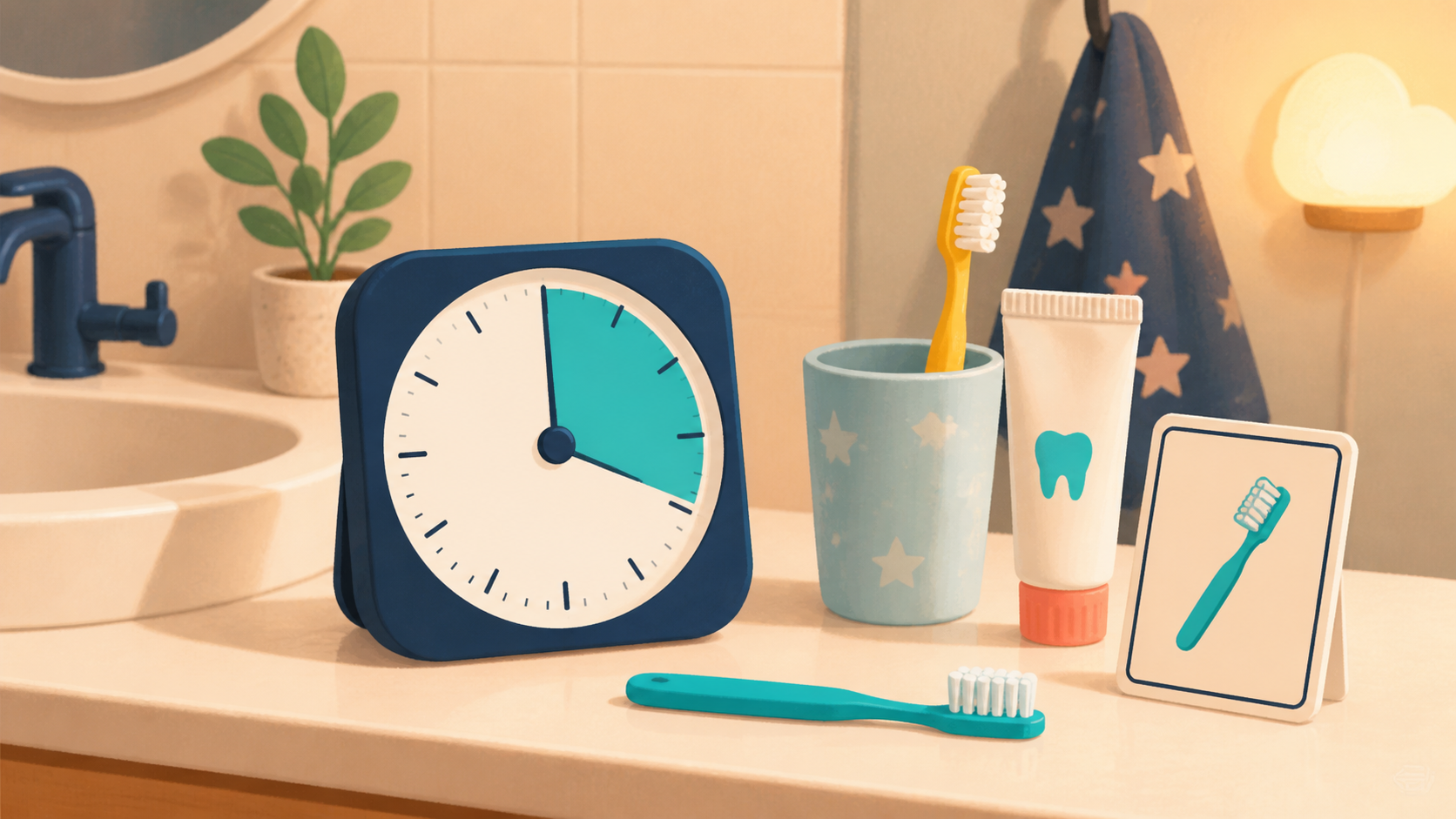
Then set a visual timer.
The timer does not make the boundary magical.
But it moves part of the job out of your voice.
You do not have to keep announcing, warning, explaining, and defending.
The child can see:
There is still time.
Time is getting smaller.
The routine is moving forward.
Why this can help ADHD kids
For many ADHD kids, bedtime routines are especially hard.
Not because they do not know teeth matter.
Not because they are trying to ruin the evening.
Often, several hard things are happening at once:
- shifting away from a preferred activity
- starting a boring task
- sensing that bedtime is getting closer
- feeling rushed
- losing track of time
- reacting strongly to repeated verbal reminders
More talking can make all of that louder.
Every extra sentence gives the child another place to push, negotiate, correct, or protest.
A visual timer can simplify the moment.
Instead of a long back-and-forth, the adult can point back to the same clear structure:
“The timer is running.”
“Teeth before bedtime.”
“I’ll help if you need help starting.”
That is enough.
Keep the consequence predictable, not dramatic
The goal is not to scare a child into brushing.
The goal is to make the routine trustworthy.
If there is a consequence, it should be:
- simple
- related enough to the routine
- explained before the timer starts
- something you can actually follow through on
- not bigger than the problem
For some families, that might mean:
“If teeth are not brushed before the timer ends, we will skip the extra story tonight.”
For others:
“If brushing takes the whole bedtime window, there will not be time for a treat tomorrow.”
Or:
“I will help you brush when the timer ends, but we will not keep debating.”
The exact consequence is less important than the pattern:
Clear boundary.
Visible time.
Calm follow-through.
No second argument about the first argument.
A script for tonight
Try keeping it short.
Before the usual debate starts, say:
“It is time to brush teeth.”
If your child argues:
“I hear you. I’m not discussing brushing teeth anymore.”
Then:
“You have 10 minutes. The timer will show you.”
If they keep arguing:
“The timer is running.”
If they ask again:
“The timer is running.”
If they need help starting:
“I can walk with you to the bathroom.”
That is it.
Short does not mean uncaring.
Short means you are not turning the routine into a debate.
Make brushing teeth visible tonight.
Duckie turns “you have 10 minutes” into a visual countdown your child can see, so you do not have to keep repeating the boundary.
What if they wait until the last second?
They might.
That is still information.
Some kids need the edge of the timer before their body starts moving.
If they brush at minute nine, that is still brushing.
You do not have to lecture about how they “should have started earlier.”
Just let the routine complete.
If waiting until the last second creates too much chaos, shorten the window next time.
Try five minutes instead of ten.
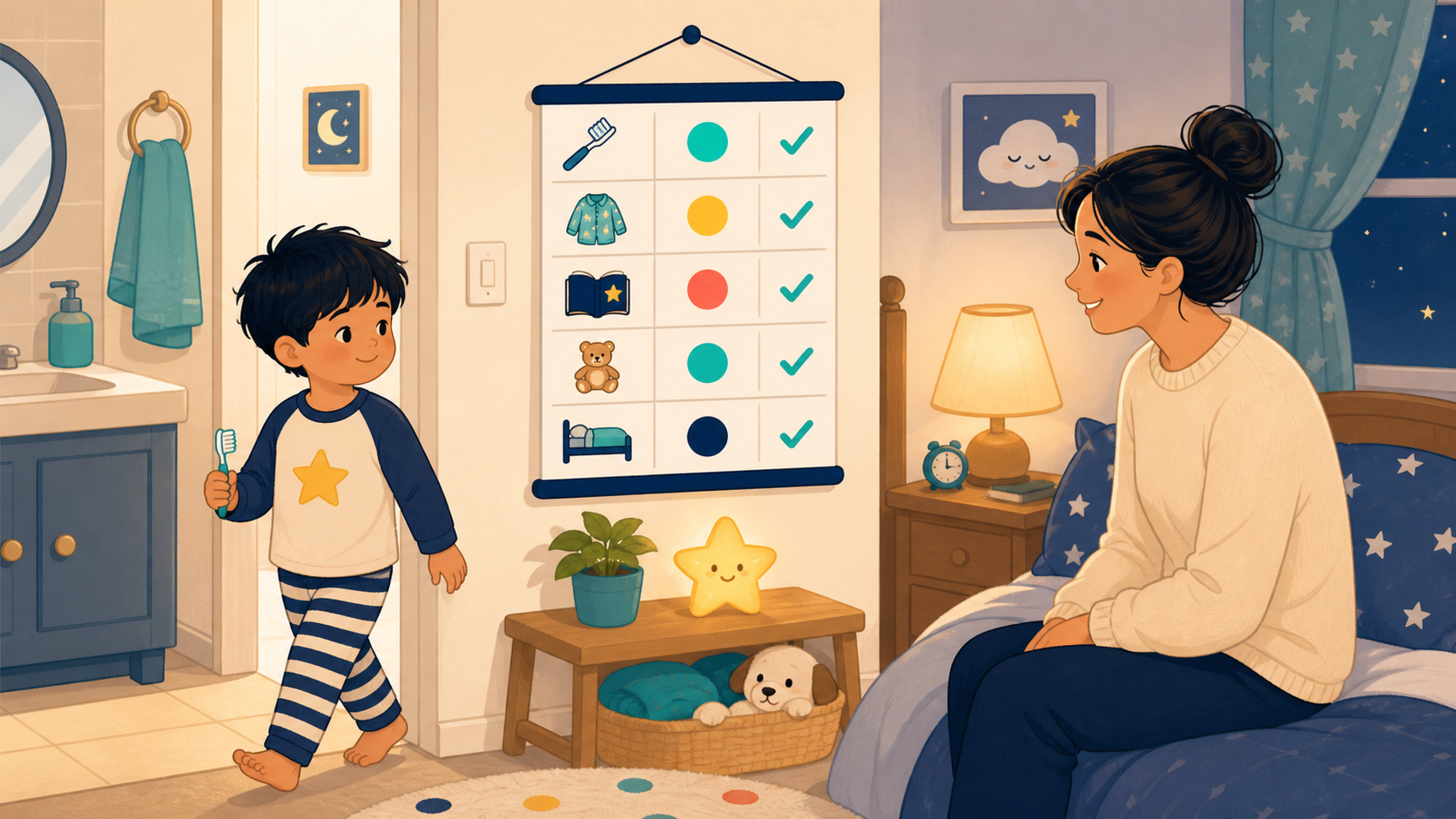
Or use a now-next board:
Now teeth.
Next pajamas.
Then story.
The point is to make the next step easier to start, not to win a timing argument.
What if they still refuse?
Then lower the amount of talking.
Do not restart the debate.
You can offer one concrete support:
“Do you want to brush first, or do you want me to help start?”
“Do you want the blue toothbrush or the green one?”
“Do you want to stand on the stool or sit on the edge of the tub?”
Keep choices small.
Keep the boundary the same.
And if toothbrushing is consistently intense because of sensory discomfort, taste, gagging, pain, or dental anxiety, treat that as a real signal.
Try a different toothbrush, toothpaste, posture, song, mirror setup, or dentist guidance.
A timer helps with transitions.
It does not solve every sensory barrier.
Build it into the bedtime routine
Brushing teeth gets easier when it is not floating by itself.
It should have a place in the evening sequence.
For example:
Dinner.
Play.
Timer.
Teeth.
Pajamas.
Story.
Bed.
When brushing has a predictable before and after, the child does not have to renegotiate where it belongs every night.
They can see:
This is just the next step.
Not a surprise.
Not a debate.
Not a brand-new demand.
Just the next square on the routine.

The win is not perfect obedience
The win is a calmer loop.
You say the boundary.
You make time visible.
You stop feeding the argument.
You follow through.
Some nights will still be messy.
Kids are kids.
ADHD makes transitions harder.
Bedtime is often when everyone has the least patience left.
But you do not have to argue your child into brushing every single night.
You can make the routine clear enough that your voice does not have to carry the whole thing.
The timer can show the time.
The routine can show what comes next.
And you can stay calm enough to stop participating in the debate.
That calm is not passive.
It is the intervention.
Try Duckie for bedtime transitions.
Use a visual timer and simple routine cues to make brushing teeth feel less like a nightly negotiation.
相关专题聚合
如果这篇内容对你有帮助,建议继续看这些专题页。