 KidCue
2026-02-10
Cutting TV When It’s Also Your Sanity: A Visual Schedule That Actually Helped
A single‑parent perspective on reducing screen time without chaos, using a visual schedule and gentle visual timers.
这篇文章尚未完成中文翻译,以下正文为英文原文。
I wanted to cut back on TV. I also needed ten quiet minutes to breathe.
As a single mom with a three‑year‑old, I kept hitting the same wall: if I removed screens, I lost the only break I had.
The model that helped me was this:
Most screen‑time battles aren’t about screens. They’re about transitions.
So I stopped focusing on the “no TV” rule and started focusing on what comes next.
The visual schedule that finally worked
I put a simple visual schedule at toddler height. It showed the sequence:
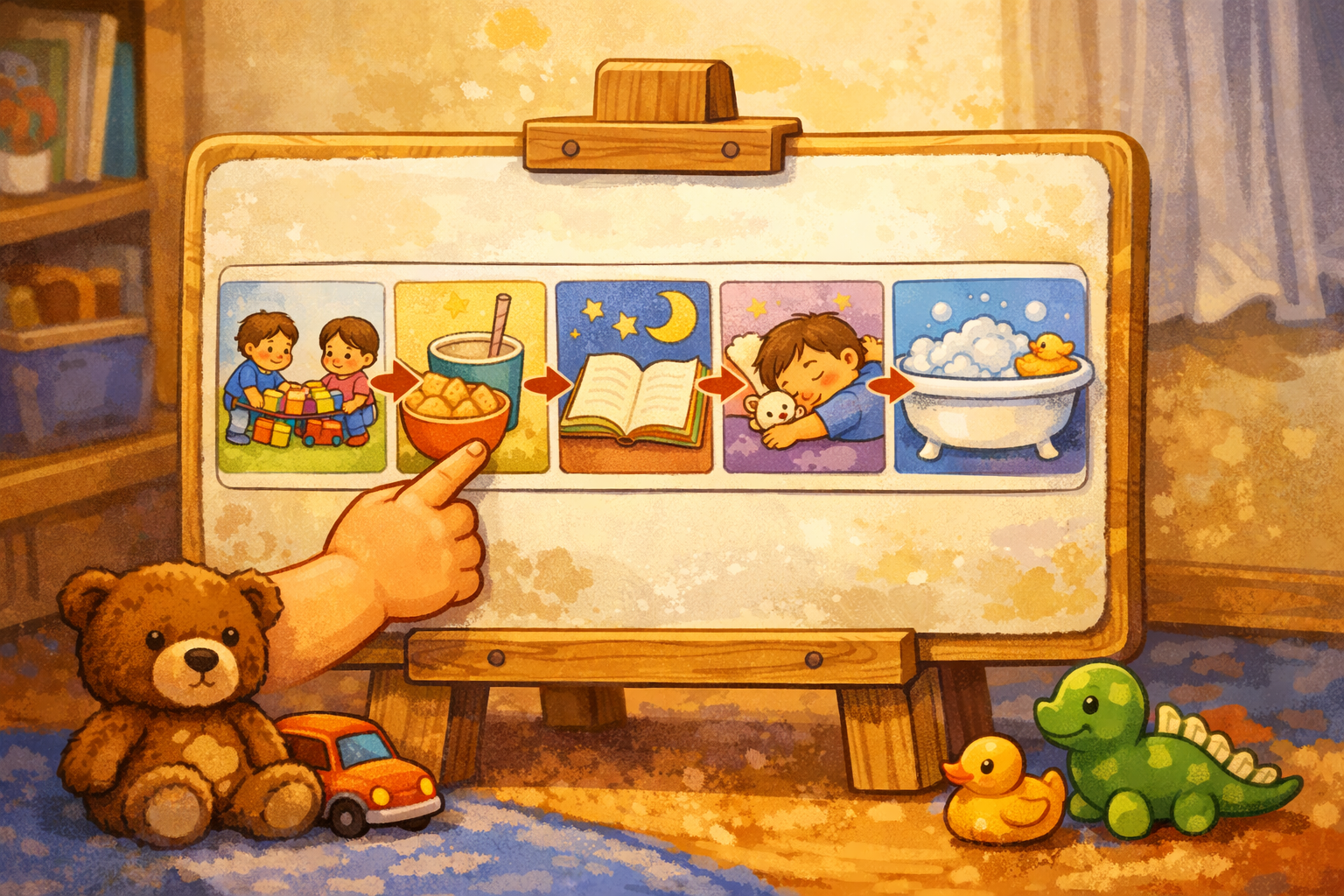
Play → Snack → Story → Quiet time → Bath
Each step had a picture. No text needed.
When the TV turned off, I just pointed to the next picture.
That reduced the arguing more than any lecture ever did.
If you’re new to it, this guide on visual schedules for kids shows how to build the simplest version.
The “TV to calm play” bridge
The hardest transition is from fast stimulation to open‑ended play.
So I added a bridge step between TV and the next activity:
- a short snack
- a puzzle on the table
- a familiar book
The bridge was still screen‑free, but it was easy enough that my child didn’t spiral.
This is the same idea in a visual schedule for transitions: the gap becomes visible.
Visual timers: how we used them
I used a visual timer not to punish, but to make the end feel real.
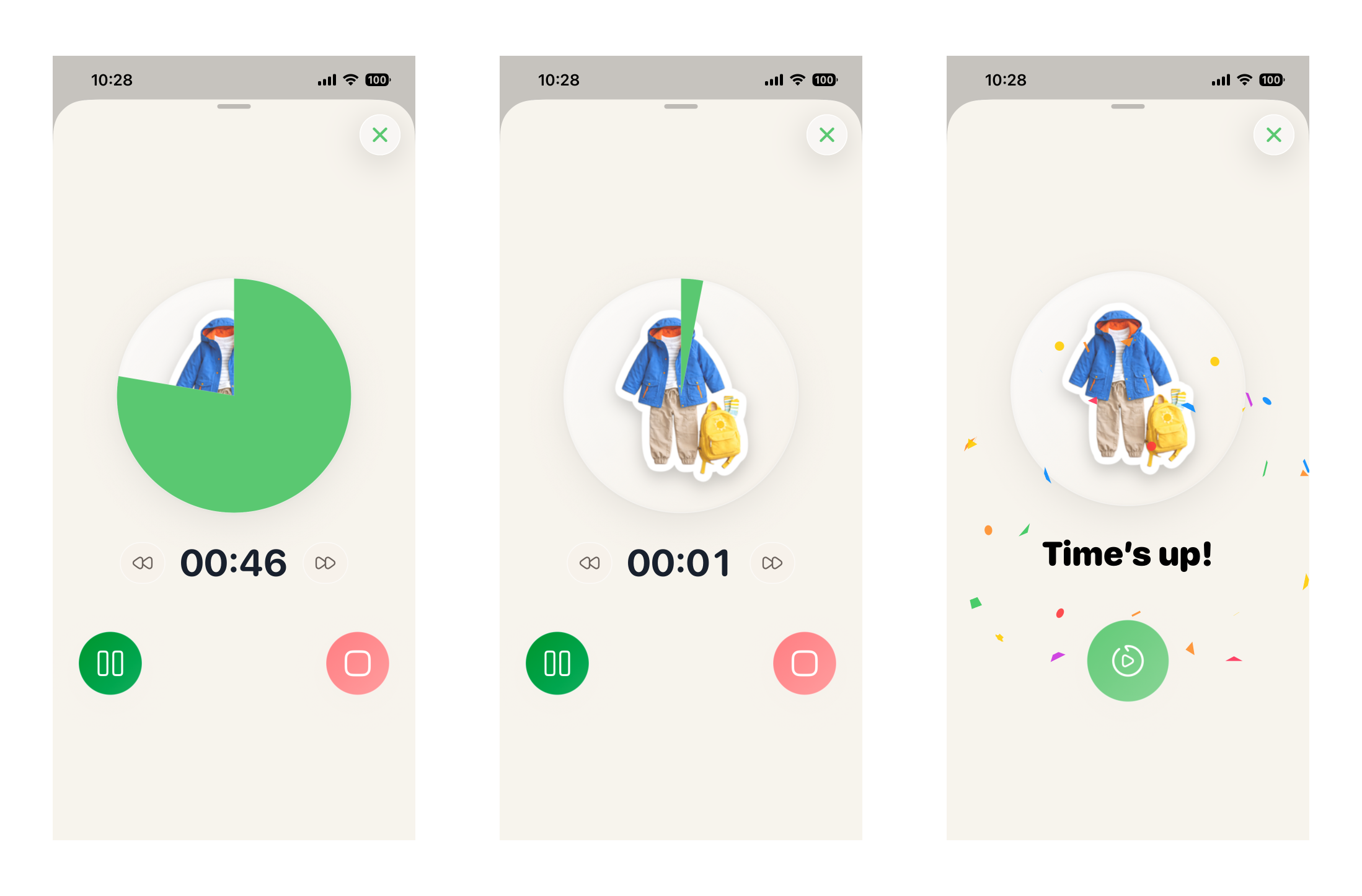
This example uses KidCue’s built-in visual timer.
What worked:
- 10–15 minutes for a show
- 2‑minute “wrap‑up” timer
- then the next picture on the schedule
We used a visual timer so the countdown didn’t feel like me “taking something away.”
Realistic alternatives that bought me a break
I didn’t replace TV with “perfect parenting.” I replaced it with things that still gave me a pause:
- Tonie/Yoto audio playlists
- slow‑paced media (when we did use a screen)
- open‑ended toys rotated weekly
- books set out in one open basket
The goal wasn’t no screen time. It was less chaos when it ended.
A practical example you can copy
Here is the exact flow we used for a while:
TV → Snack → Picture book → Quiet play → Bath
I put the pictures on a strip. When TV ended, I just pointed.
No extra words. No negotiations.
That’s what finally made the boundary feel survivable for both of us.
Have you tried a visual schedule for screen time transitions? If so, what step helped the most?
相关专题聚合
如果这篇内容对你有帮助,建议继续看这些专题页。