 KidCue
2026-01-29
Toddler Doesn't Want to Go to Preschool (Drop-Offs Feel Impossible)
For preschool drop-off meltdowns, use a predictable goodbye, a short visual routine, and one clear handoff so separation feels less sudden.
这篇文章尚未完成中文翻译,以下正文为英文原文。
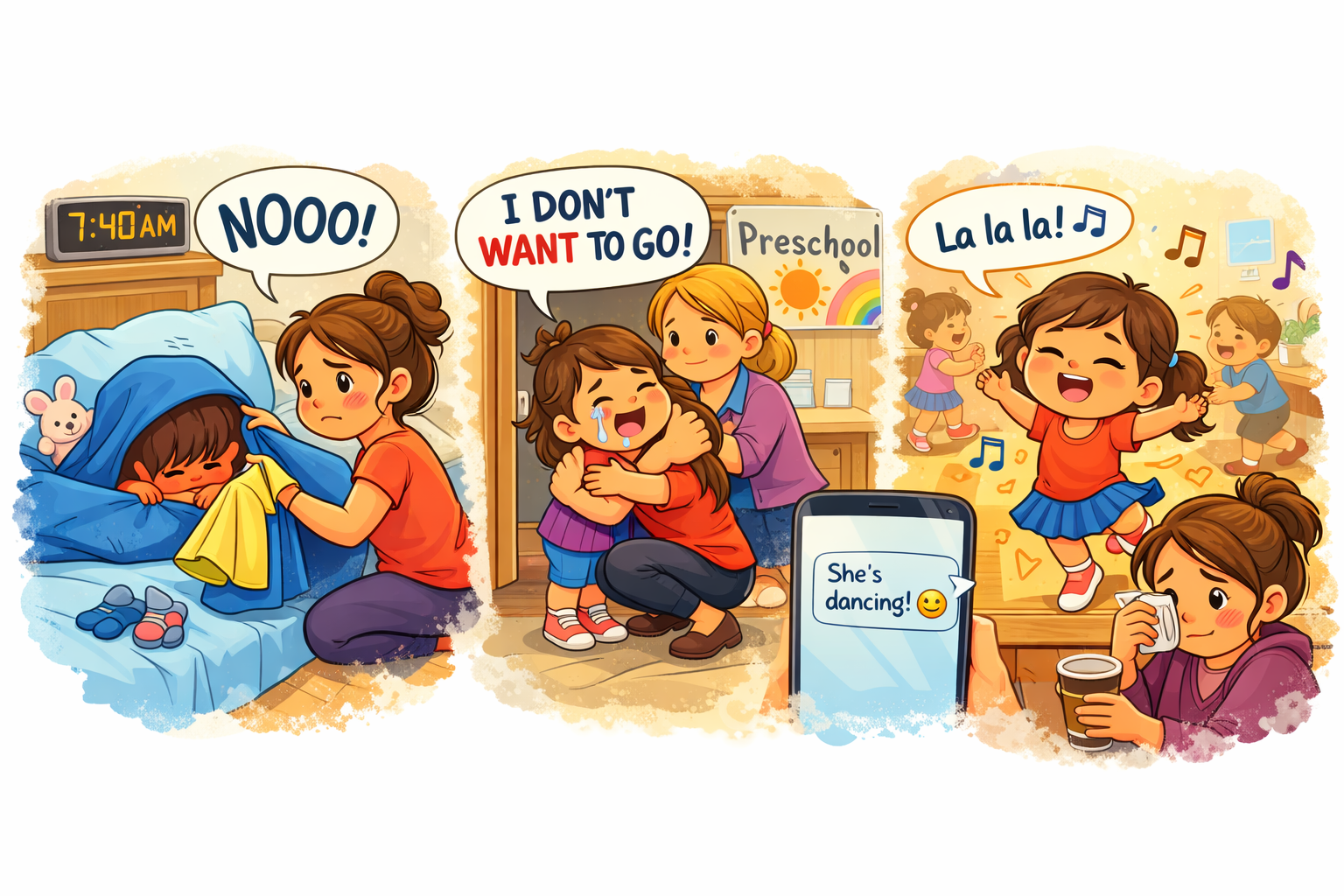
Writing this as the parent who has ugly-cried at the preschool gate more times than I admit in meetings.
7:40 a.m. alarm. First word from my almost-three-year-old: “No.” I hand over clothes; she dive-bombs under the blanket. I lift her up; she noodles out of my arms. At the classroom door it’s tears and snot, and ten minutes later the teacher texts, “She’s dancing.” I believe them, and I still start work in a fog.
Why she melts down (and only with us)
- Separation anxiety + invisible time: “See you later” sounds like forever when time isn’t concrete yet.
- Learned resistance: Crying has earned more parent time before; resistance becomes the default script.
- Our anxiety is an amplifier: The tighter we are, the louder her “no” gets. Loop complete.
Tactics that actually work (no wishful thinking)
-
Post the morning steps the night before: Wake → teeth/hair → breakfast → shoes → out the door. Keep it to 4–5 picture cards so her half-asleep brain has a map.
-
Same opener, zero negotiating: “We follow the pictures, we go to school, I pick you up.” Then move. No “Do you want to…?”
-
Visual timer as the bridge: Three-minute visual timer before shoes. Time turns into color instead of another adult command. When she says “no,” I point: “When the color ends, the door opens.”
-
Doorway job for her: Carry the key card, push the door, hand her teddy to the teacher. She’s not being taken; she’s on a mission.
-
Short, scripted goodbye: Kneel, hug, eye contact, “I’m back at 4:30. Love you.” Turn and leave. The longer we hover, the louder the cry.
-
Tiny, consistent ritual (not a bribe): One grape or a single sticker on the way home paired with, “You finished the morning steps.”
Why visuals beat more talking
Words = fog. Pictures = road signs. Visible order, visible time, visible ending shrink the unknown. If you want ready-made cards instead of drawing them, KidCue’s visual schedule app ships with drag-and-drop cards for “wake up → teeth → clothes → out the door → school → pickup.” Download it, hand over the phone or iPad, and let them see what’s next before the fight starts.
One-week rollout, day by day
-
Day 1–2: set the stage
Post 4–5 pictures the night before. Follow them without commentary. Use the visual timer for one task (shoes). -
Day 3–4: peak pushback
Expect a rebound tantrum; keep the exact same steps and the same goodbye sentence. No fresh bargaining. -
Day 5: first smooth morning
Say out loud, “You did three steps by yourself today.” Let them pick tomorrow’s first card to boost control. -
Day 6–7: lock in the script
Fewer verbal reminders; point to the cards or timer instead. If there’s regression, drop back to the 4-step version—don’t add new rules.
Common traps
- Over-rewarding: Stack too many prizes and it turns into a negotiation arena. Keep one small ritual.
- Too many cards: More than six steps and they ignore the board.
- Changing rules on the fly: “Five more minutes” nukes yesterday’s stability.
The realistic ending
She may still cry on Wednesday. But you’re less hijacked, and she knows the script. Visuals turn “I don’t want to” into “I know what’s next.”
If you’re holding a sobbing toddler at the door, make the steps visible, let time be seen, keep the goodbye short. When you want ready-made visuals, open the KidCue download page — no sign-ups, straight to the App Store, and your morning script is ready to run.
相关专题聚合
如果这篇内容对你有帮助,建议继续看这些专题页。