 KidCue
2026-01-23
ADHD and Self-Regulation: What It Can Look Like
Why ADHD is a challenge of self-regulation, how effort, emotions, and time are managed in the brain, and why these skills take decades to automate.
这篇文章尚未完成中文翻译,以下正文为英文原文。
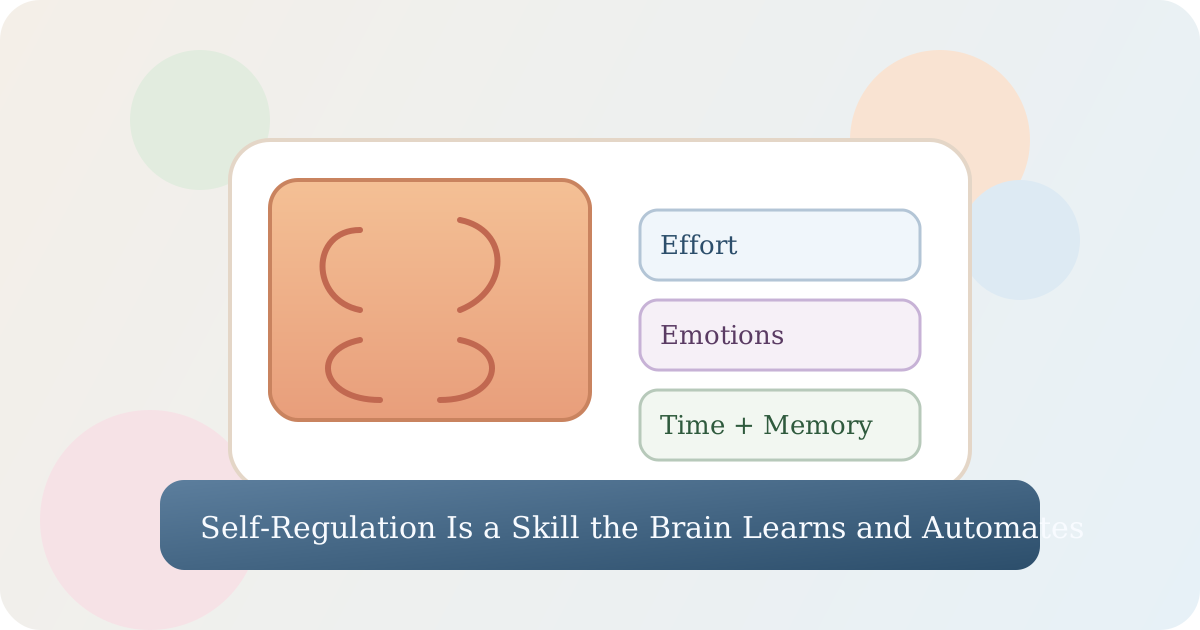
ADHD is often misunderstood as a problem of attention. In reality, it is a self-regulation problem.
That means difficulty regulating:
- Effort
- Emotions
- Memory and time
When these systems are strained, behavior looks like a symptom list:
- Restless or fidgety
- Outspoken or interrupting
- Forgetful or daydreamy
- Emotional and reactive
- Late, rushed, or disorganized
- Labeled as lazy or unmotivated
Those behaviors are not the core problem. They are the surface output of an internal system that is struggling to regulate itself.
How We Regulate Effort and Emotion
Self-regulation is not just willpower. It is a sequence of mental routines that rely on the brain to do several things at once:
- Draw on stored memories and past experiences
- Notice our own behavior in real time (self-awareness)
- Talk ourselves through what to do next (inner speech)
When those steps are smooth, effort feels steady and emotions stay manageable. When they break, everything feels harder and more intense.
The Brain Work Behind Self-Regulation
These routines are powered by the prefrontal cortex and related systems. They allow us to plan, pause, remember, and adjust.
But here is the catch: these functions are not automatic at first. They have to be:
- Learned
- Practiced (starting around age 2, mostly through self-directed trial and error)
- Perfected (often taking decades)
- Automated (so they happen in the background)
Most adults barely notice they are doing these tasks. It feels like simple effort or self-control. But it is actually a complex set of skills running quietly in the background.
Why ADHD Makes These Routines Harder
ADHD involves impaired brain functions that make these routines less reliable. The result is not a lack of desire or intelligence. It is a system that struggles to:
- Hold information in mind while acting
- Regulate emotional intensity
- Sustain effort without external structure
- Feel time passing accurately
This is why ADHD looks inconsistent. A child can focus deeply on a game, then shut down when asked to start homework. It is not a choice. It is the regulation system losing traction.
The Takeaway
ADHD is not a motivation problem. It is a self-regulation problem.
That shift matters, because it changes how we respond. Instead of blaming effort, we build supportive structures:
- Clear routines
- Visual cues
- External reminders
- Calm transitions
These are not crutches. They are tools that support a system still learning how to regulate itself.
When we see ADHD through this lens, we stop asking, "Why won’t you just try harder?" And start asking, "What support would make this easier to regulate?"