 KidCue
2026-01-28
2.5-Year-Old Waking Up at Night After Travel: A Middle-Ground Plan (Not Cry It Out)
Toddler waking up 3–5 times a night after travel? Here’s a gentle middle-ground plan using a visual timer, a predictable bedtime routine, and visible transitions.
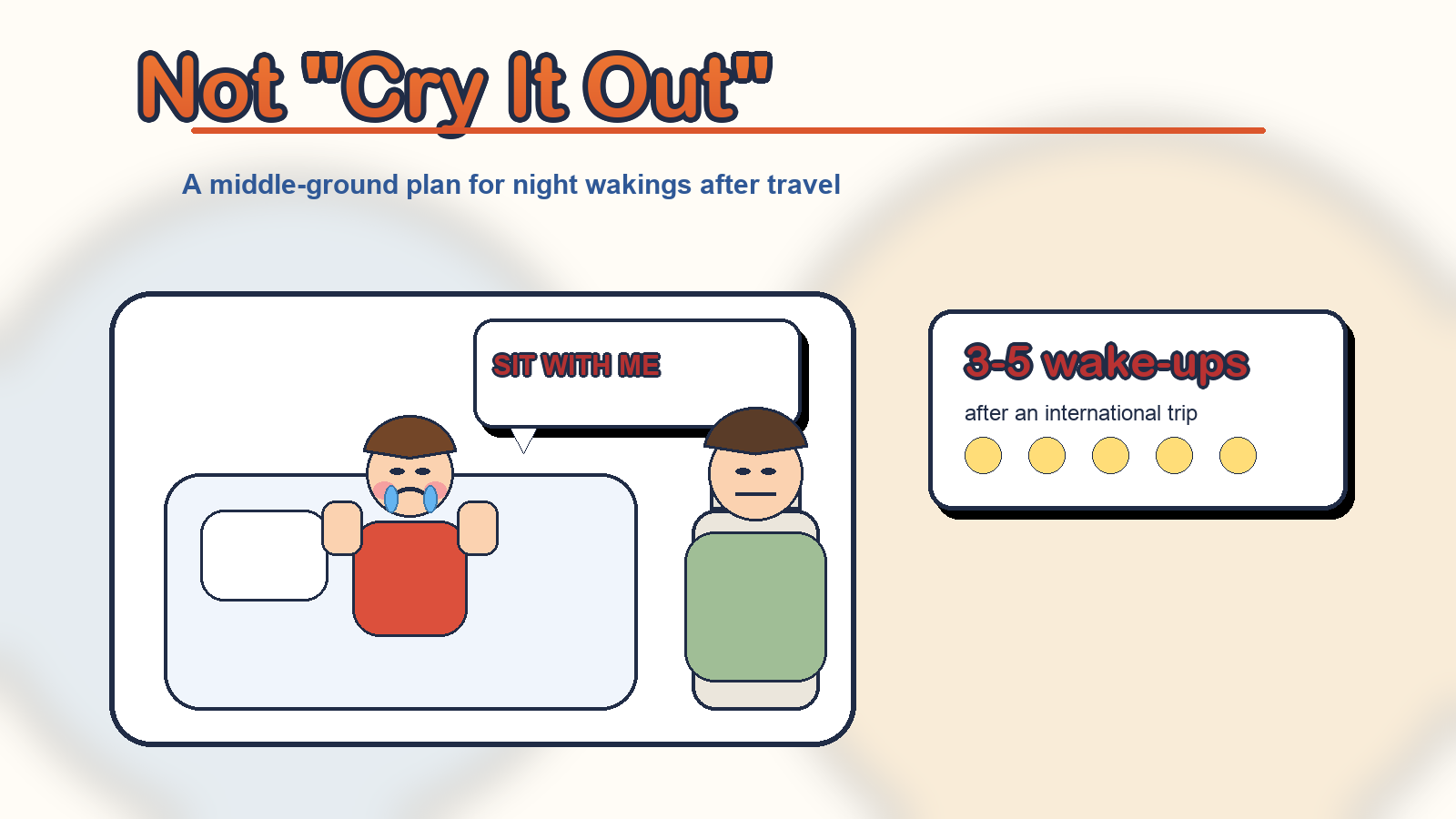
If your 2.5‑year‑old used to wake up occasionally and now wakes up 3–5 times a night after travel, you’re not alone.
What makes it extra hard is the specific request:
“Sit with me.”
And the sudden flip from calm to screaming the second you try to leave—even after an hour.
This post is not a judgement piece. It’s a practical middle‑ground plan (not “cold turkey cry it out”) that makes the night feel predictable again.
First: rule out the obvious (quickly)
I’m not a doctor, but as a baseline: if night wakings changed suddenly after a trip, do a quick “checklist” before you assume it’s purely behavioral:
- illness, ear pain, reflux, teething
- constipation
- room temperature / new noises / light leaks
- schedule shifts (nap timing + bedtime timing)
If you’re unsure, ask your pediatrician and trust your gut.
The problem usually isn’t “attention.” It’s an invisible transition.
In the day, toddlers can follow a routine because the world is full of cues.
At night, the cue is missing:
- When does sitting end?
- What happens next?
- How do I know I’m safe when you leave?
That is why the same idea that helps daytime meltdowns helps night meltdowns: make the transition visible.
If this concept feels familiar, it’s the same core mechanism behind a visual schedule for kids and a visual schedule for transitions.
The middle‑ground plan: a visual timer + one clear rule
Instead of debating “cry it out” vs “sit all night,” try one firm‑but‑gentle rule:
“I will sit with you for X minutes, then I will go back to my bed.”
Use a visual timer so the ending isn’t a surprise.
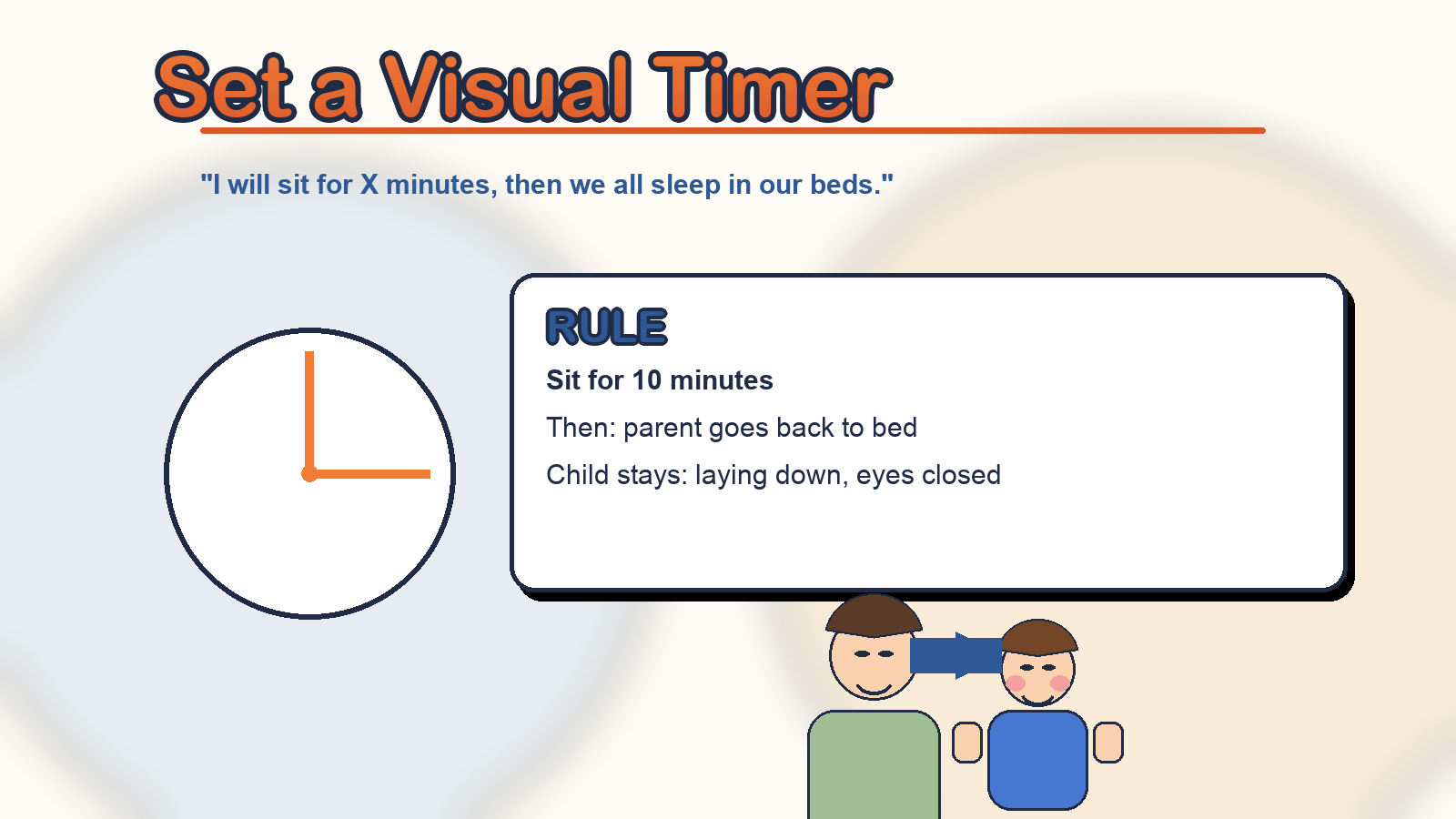
What matters most is what happens next: when the timer ends, you follow through.
Not harsh. Not dramatic. Just consistent.
The boundary that keeps this from becoming a 2‑hour hangout
If your child keeps you in the room by talking every 20 minutes, set a simple condition:
“If you want me to sit, you need to be trying to sleep: lay down, eyes closed, no talking.”
If not, you step out and reset. This is not punishment—it’s making the rule real.
Practice the plan in the daytime
This sounds silly until you try it: toddlers do better when the nighttime plan is not a surprise.
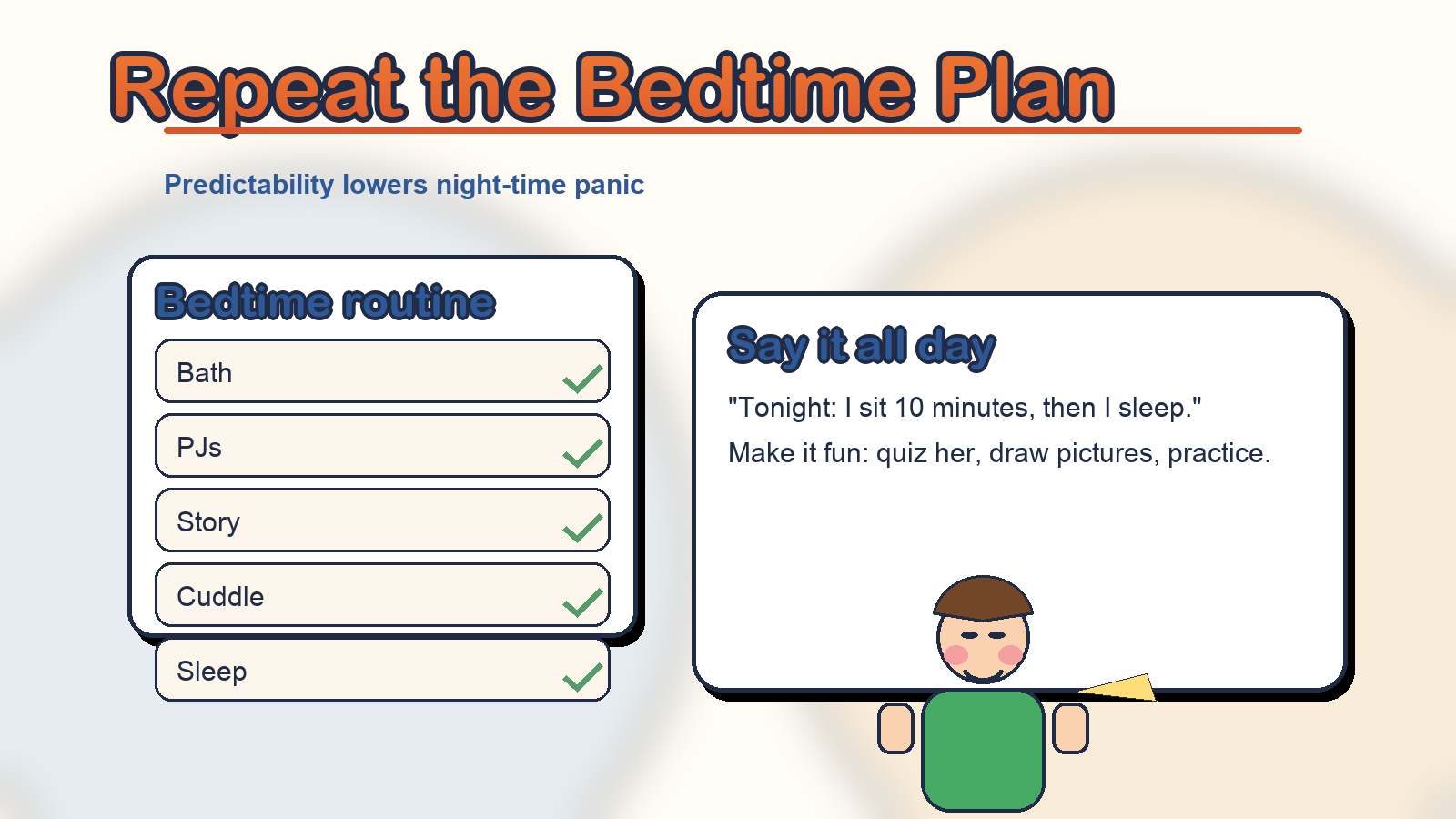
Repeat it in the daytime:
- “Tonight, I sit for 10 minutes, then I sleep in my bed.”
- draw a picture of you both in your own beds
- role‑play the routine with toys
The goal is not perfect compliance. The goal is fewer surprises.
Use a simple night‑waking flow (so you don’t improvise at 2:14am)
Most families fail at night because they’re exhausted and negotiating in the dark.
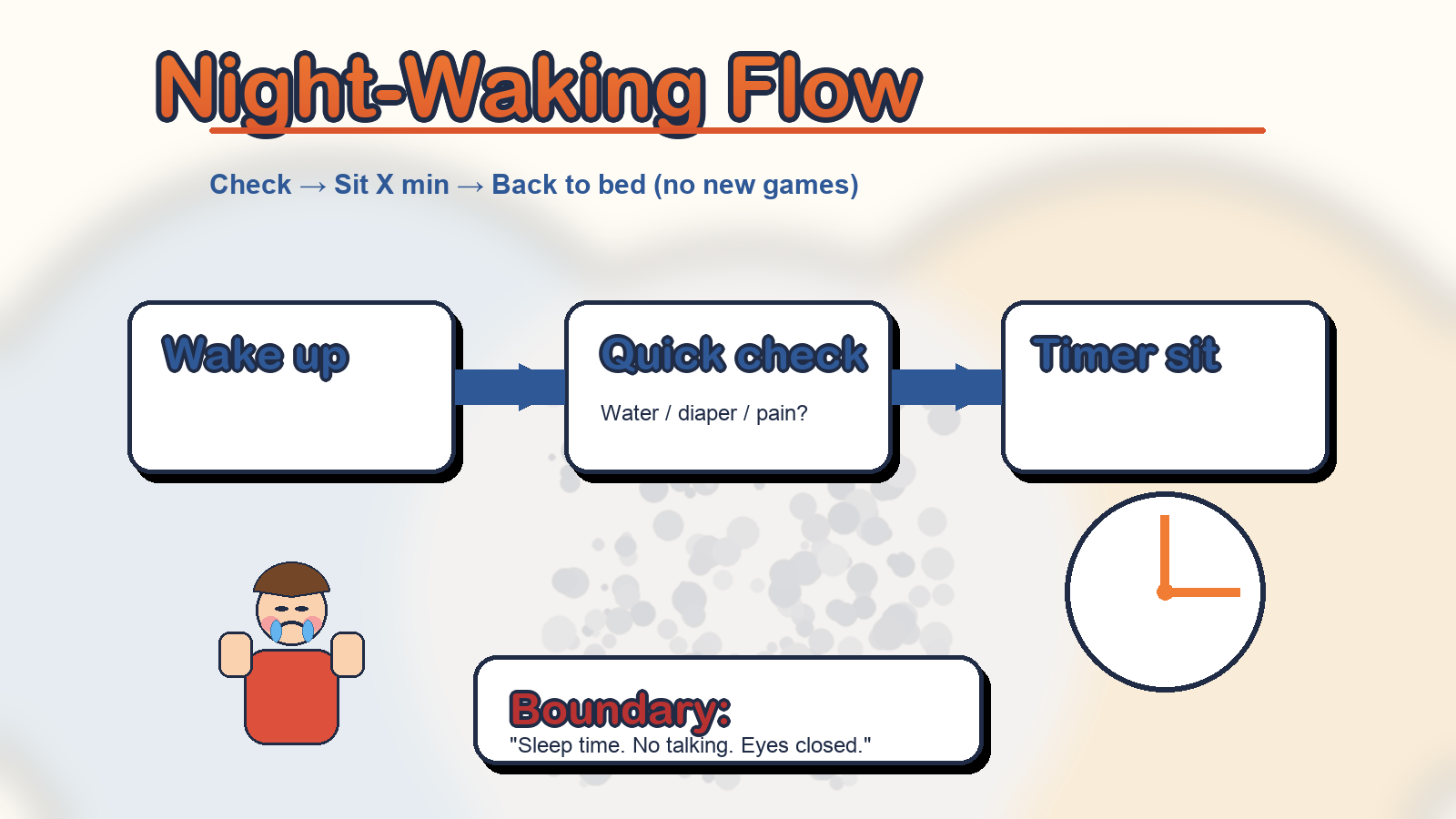
Make a tiny flow you can repeat every time:
- Wake up
- Quick check (water/diaper/pain)
- Timer sit
- Back to bed
If you want an even deeper guide to visuals (and why they work), read How to Make a Visual Schedule + Use It Well.
And if your child’s “step one” feels impossible in other routines too, the same principle applies: visible time lowers pressure. This post on visual timer for ADHD explains why.
The point is not to toughen them up
The point is to make the night feel predictable again—so your child can let go, and you can sleep too.
Have you found a “middle ground” that helped night wakings without going fully cold‑turkey?
Related Topic Hubs
If this post helped, these curated hub pages can guide your next steps.