 KidCue
2026-01-25
How to Make a Visual Schedule + Use It Well
Learn how to make a visual schedule for kids, choose the right format, keep the steps manageable, and support the transitions where routines fall apart.
I used to think a visual schedule was just a row of pictures.
If a child could see the steps, they would follow the steps. That sounded reasonable. It was also wrong.
The schedule looked perfect on the wall. The meltdown still happened at the transition.
The model that finally clicked for me is simple:
Most visual schedules fail not because kids refuse the plan, but because the transition itself is invisible.
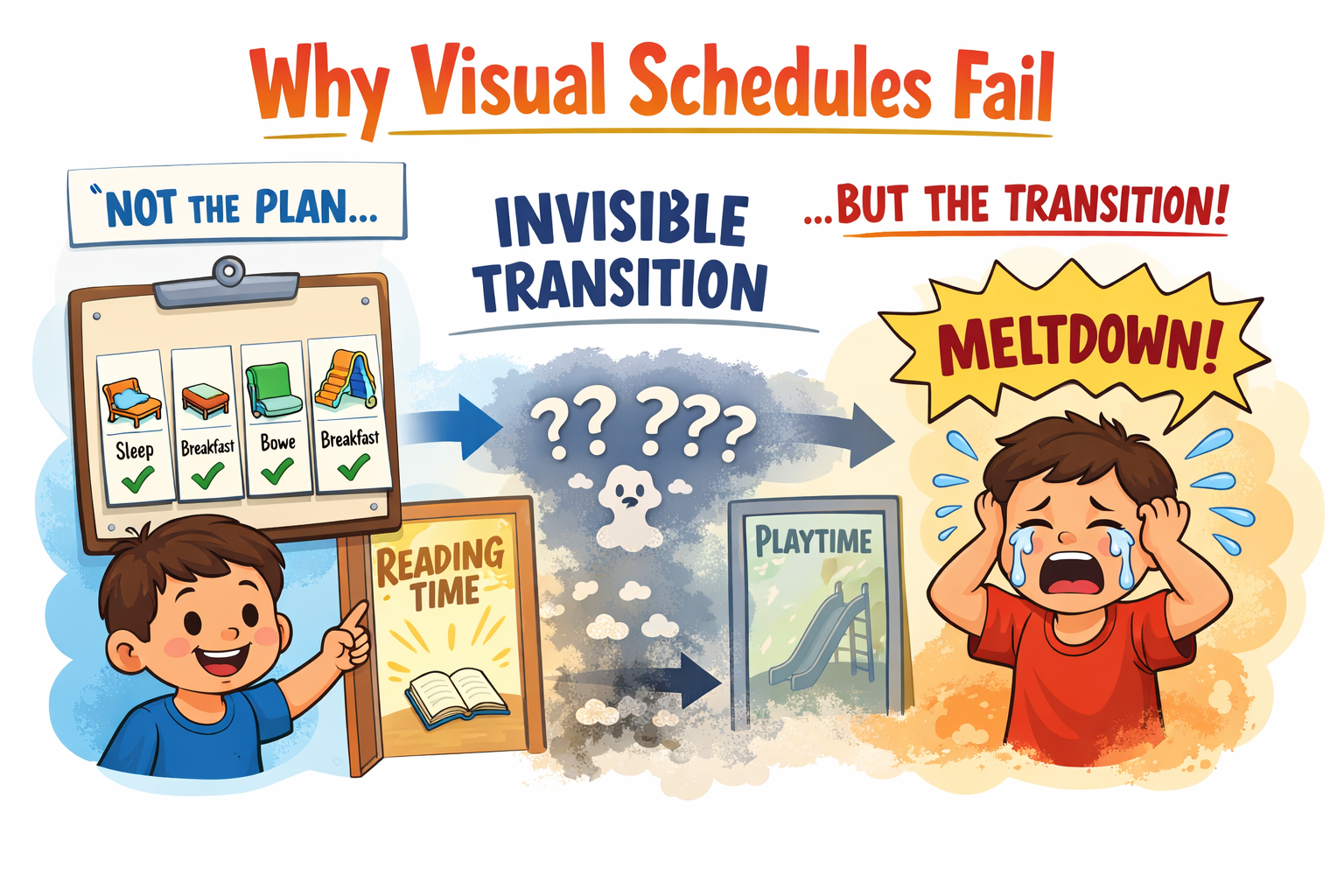
This guide is for parents who want a visual schedule for kids that actually works in real routines, not just in theory.
What a visual schedule is (and what it is not)
A visual schedule is a way to show time and routines visually so kids can see:
- what is happening now
- what comes next
- when an activity ends
It is not a parent reminder list. It is a map for the child.
Who benefits from a visual schedule
Visual schedules help most kids, but they are especially effective for:
- kids with ADHD
- autistic kids
- children who struggle with transitions
- kids with weak executive function
That is why a visual schedule for kids often lowers conflict across everyday routines.
The three most useful types
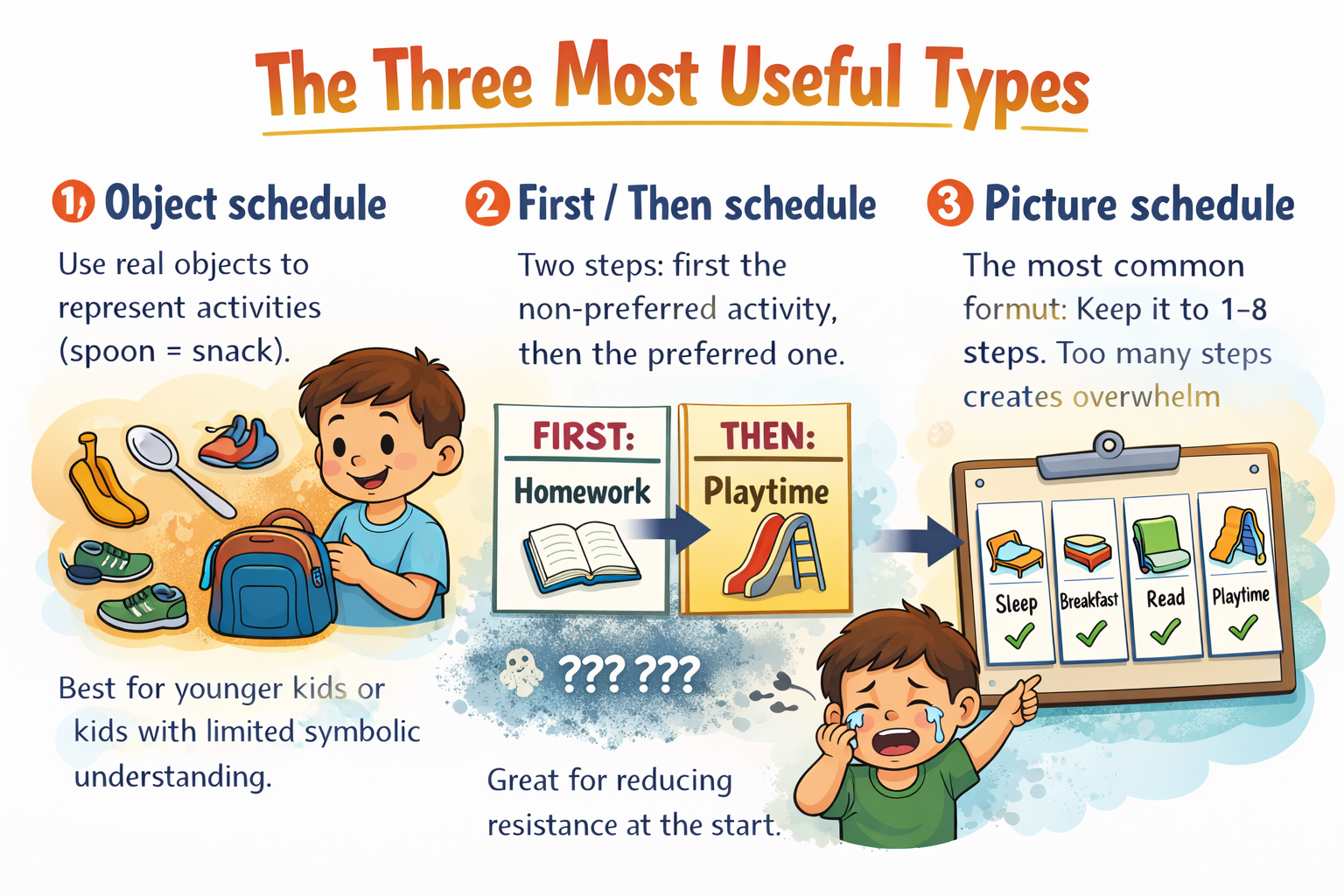
1) Object schedule
Use real objects to represent activities (spoon = snack).
Best for younger kids or kids with limited symbolic understanding.
2) First / Then schedule
Two steps: first the non-preferred activity, then the preferred one.
Great for reducing resistance at the start.
3) Picture schedule
The most common format.
Keep it to 1-8 steps. Too many steps creates overwhelm.
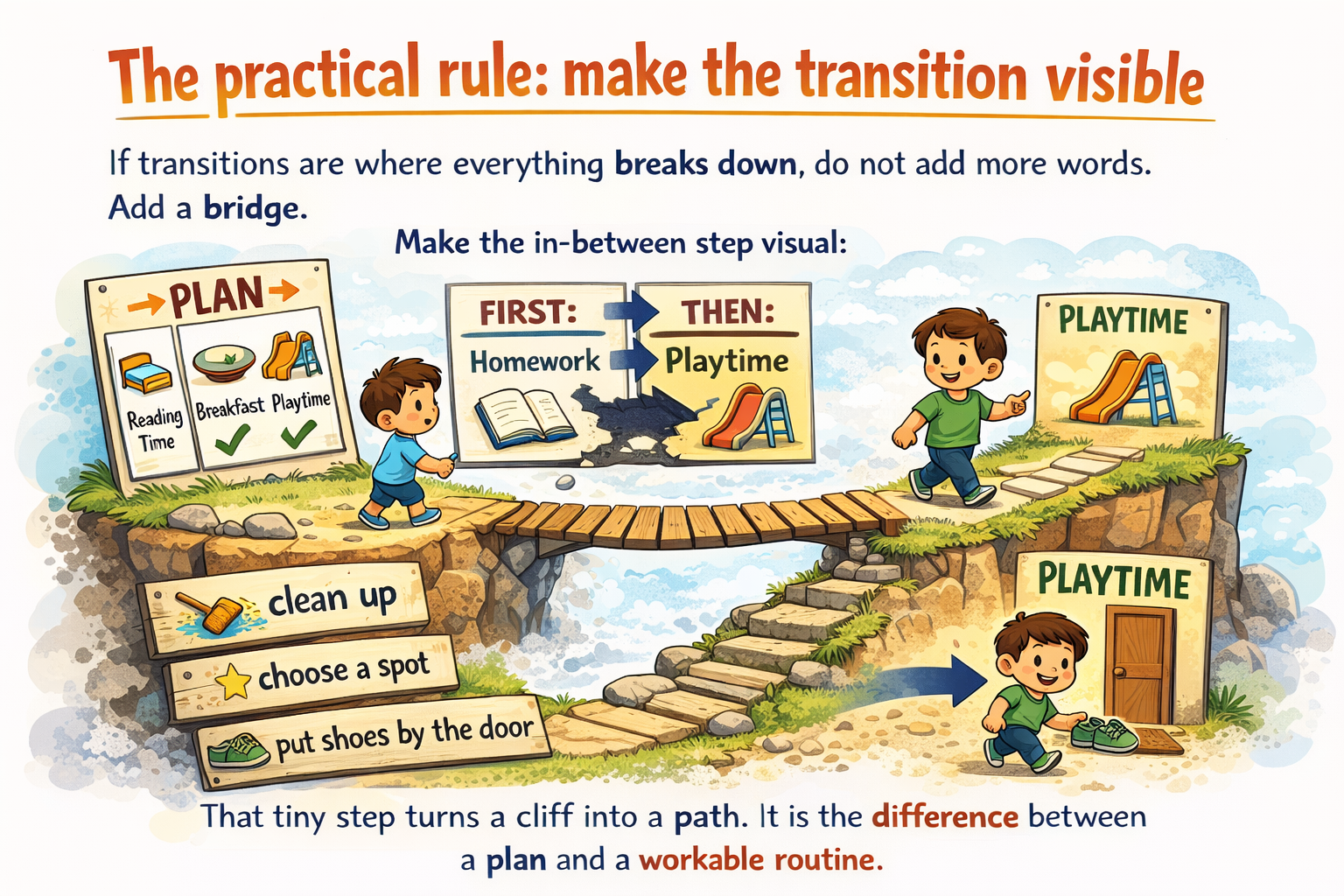
The practical rule: make the transition visible
If transitions are where everything breaks down, do not add more words. Add a bridge.
Make the in-between step visual:
- "clean up"
- "choose a spot"
- "put shoes by the door"
That tiny step turns a cliff into a path. It is the difference between a plan and a workable routine.
If you see a pattern of escape behaviors at the shift (snack, bathroom, questions), it usually means the transition is unclear. That is why this visual schedule for transitions approach can change everything.
The just-right challenge
A visual schedule should match the child's current capacity:
- their age
- their understanding level
- the routine they struggle with most
Start with fewer steps. Add only when success is consistent.
How visual schedules support executive function
A visual schedule acts like an external brain:
- it reduces cognitive load
- it anchors attention
- it makes step one feel possible
That is why a visual schedule for ADHD kids pairs well with a visual timer for ADHD when task initiation is the hardest part.
Start with one routine
Pick one daily routine. Use two steps. Make the transition visible. Repeat.
If you want a deeper look at transition breakdowns, read Visual Schedule for ADHD Kids: When Transitions Trigger Escape Behaviors.
One line to remember
A visual schedule works when it makes "what is next" feel obvious.
Have you ever had a plan that looked great but still fell apart at the transition?
Related Topic Hubs
If this post helped, these curated hub pages can guide your next steps.