 KidCue
2026-06-23
Why Kids Ask for Help Before Trying — and How a Visual Timer Can Help
When kids ask for help before trying, a short visual timer can create a gentle try-first window so they practice independence without feeling abandoned.
Some kids ask for help before they have really started.
Not because they are lazy.
Not because they are trying to annoy the adult.
Sometimes asking for help has simply become the default first step.
They see a worksheet, a puzzle, a tricky instruction, or a homework question, and before their brain has had time to settle, they say:
“I don’t know.”
“Can you help me?”
“I can’t do it.”
And if we jump in right away, the pattern gets stronger.
The child learns:
Hard feeling -> adult helps -> I do not have to sit with the hard feeling.
That is understandable. Nobody loves feeling stuck.
But if every small stuck moment gets rescued immediately, kids miss the chance to learn one very important skill:
I can try a little before I need help.
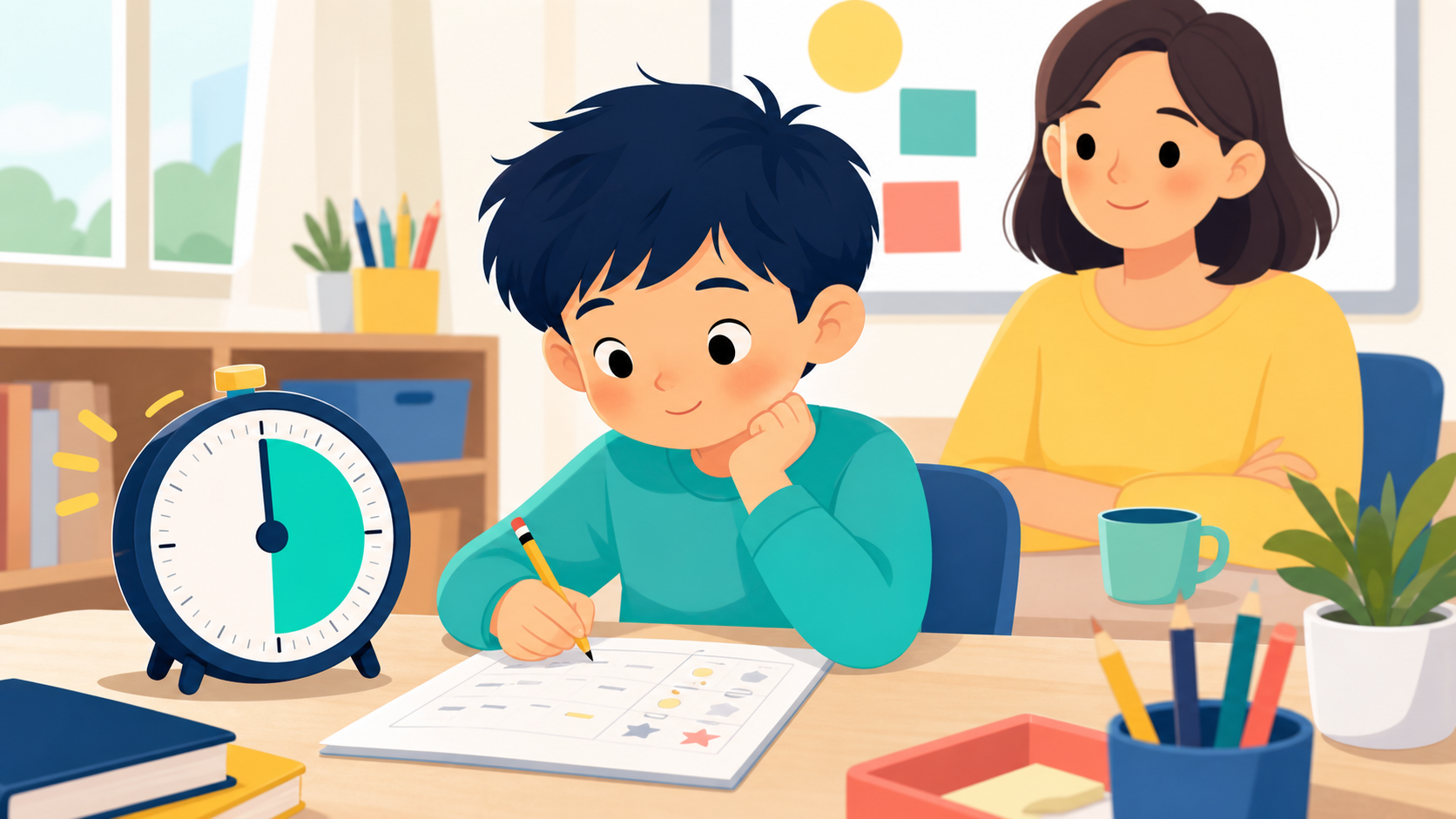
I saw a teacher describe a version of this that I really liked.
They put a visual timer on the board for the first 10 minutes of work time and told the class:
For these first 10 minutes, I am not helping anyone yet. I want you to give it a go first.
They also used the phrase “give it a wobbly go.”
I love that.
Not a perfect go.
Not a confident go.
Not a “you must already know how” go.
A wobbly go.
That language leaves room for uncertainty. It tells a child, “You are allowed to be unsure, but you still get to try.”
Why “try first” works better when it is visible
If we only say, “Try by yourself first,” many kids still hear pressure.
They may wonder:
- How long do I have to try?
- What if I still do not know?
- Are you leaving me alone?
- When can I ask again?
That uncertainty can make the task feel bigger than it is.
A short visual timer changes the shape of the moment.
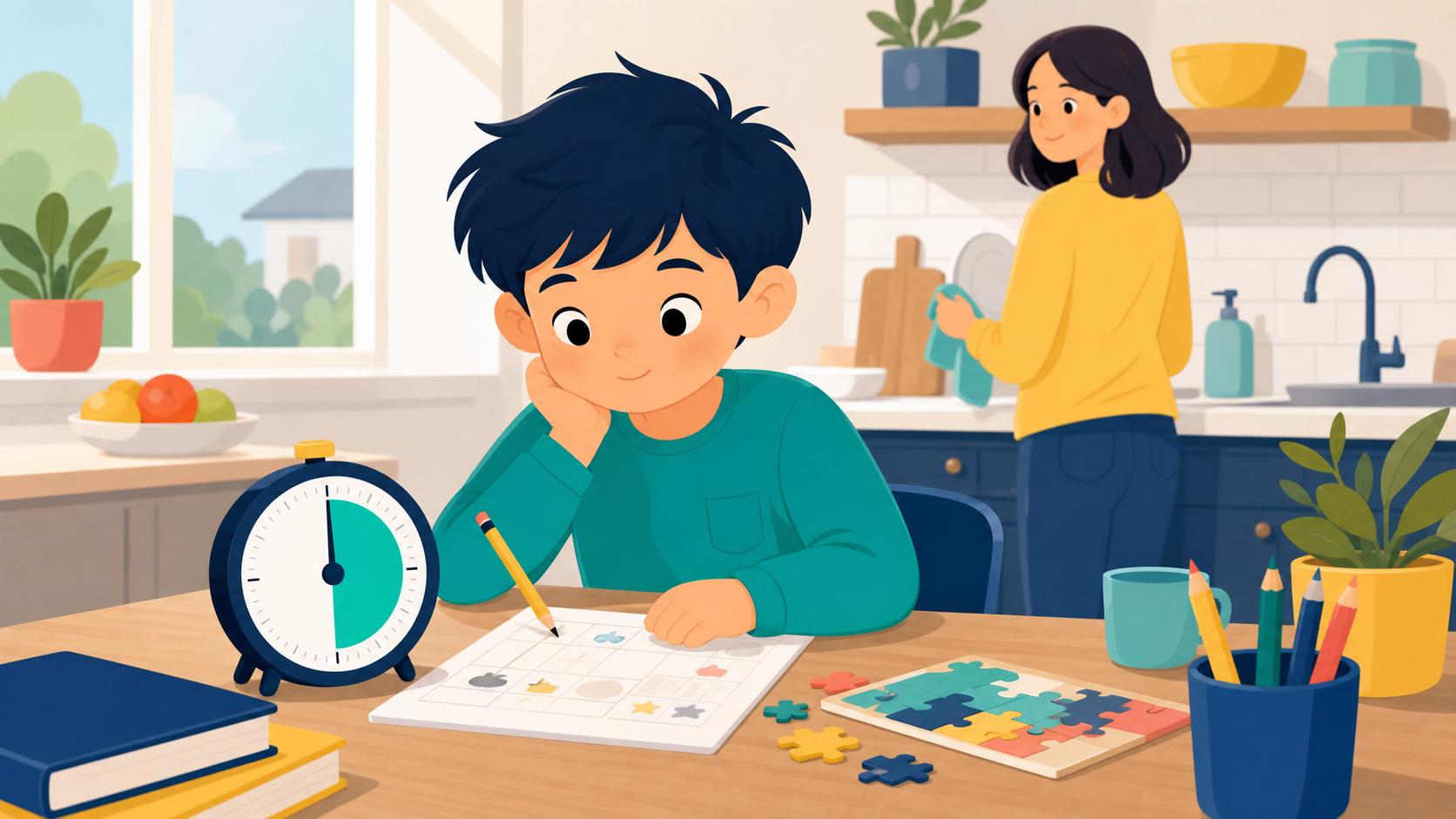
Instead of an open-ended demand, the child sees a clear window:
I am going to try for this long.
Then I can check in.
The timer makes the boundary visible without the adult repeating it again and again.
What the adult does during the try-first window
The hard part is not setting the timer.
The hard part is not rushing in.
For the first few minutes, the adult’s job is to stay calm and available without becoming the child’s working brain.
That might sound like:
“Give it a wobbly go first.”
“Circle the part that feels confusing.”
“Try one tiny piece.”
“I’ll check in when the timer is done.”
This is different from ignoring the child.
Ignoring says, “You are on your own.”
A try-first window says, “I am here, and I believe you can try before I step in.”
Try it at home, not only in classrooms
This idea is not just for teachers.
It can work at home too.
For homework:
“Try for 5 minutes. Circle what feels tricky. Then I’ll look with you.”
For getting dressed:
“Try socks first. I’ll help when the timer is done.”
For cleanup:
“Put away what you can before the timer ends. I’ll help with the hard part after.”
For puzzles or building toys:
“Give it a wobbly go. You do not have to finish. Just try the first piece.”
The goal is not to make kids independent overnight.
The goal is to make independence feel safe enough to practice.
Try Duckie for one small “wobbly go.”
Set a 5- or 10-minute visual timer before stepping in. Let your child see the try-first window, then check in when time is done.
What if they still ask for help immediately?
They probably will at first.
That does not mean the strategy failed.
It means the old pattern is still familiar.
Keep the script short:
“I hear you. Try one part first.”
“The timer is still going.”
“You can ask me when it finishes.”
“Mark the confusing part so we can look together.”
If the child is truly panicking, lower the demand.
Try 2 minutes instead of 10.
Try one problem instead of a whole page.
Try pointing to the first step instead of completing it.
Independence grows better from tiny successes than from big lectures.
The deeper skill: tolerate the first wobble
A lot of kids do not need the adult to solve the task immediately.
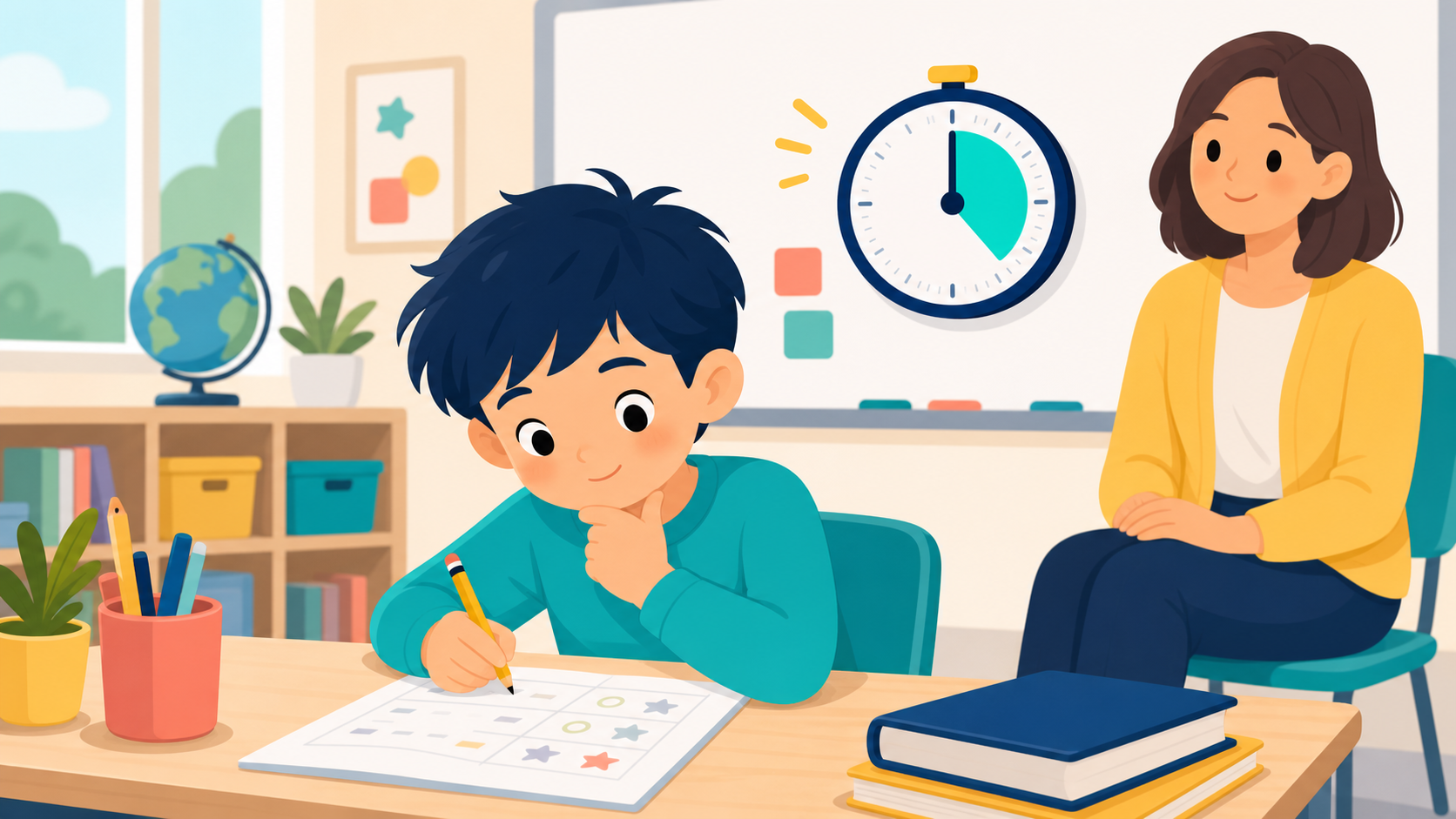
They need help tolerating the first wobble.
That moment when they do not know yet.
That moment when the answer is not obvious.
That moment when their brain says, “Escape this.”
A visual timer does not magically teach every skill.
But it can create a small container where trying feels possible.
Not forever.
Not with no help.
Just for a few visible minutes.
And sometimes that is enough time for a child to read the question again, notice the first clue, try one step, or realize they knew more than they thought.
So the next time a child asks for help before trying, I would not start with:
“You know this.”
Or:
“Stop asking me.”
I would start with:
“Let’s give it a wobbly go first.”
Set the timer.
Stay nearby.
Let the child practice being a little stuck without being alone.
That is where real independence starts.
Make the try-first window visible.
Duckie turns “try for a few minutes” into something your child can actually see.
Related Topic Hubs
If this post helped, these curated hub pages can guide your next steps.