 KidCue
2026-02-10
When a Child Won’t Stay in the Classroom: A Parent’s Lens on First/Then Boards and Visual Schedules
When a child leaves the classroom, look beyond defiance and use a first-then board, visual schedule, and school safety plan to support staying and returning.
I used to think that if a child was running the campus, the solution must be a stricter adult or a louder reminder.
Then I watched how quickly a small body learns the path between doors, hallways, and outside air. That running isn’t “random.” It’s a reward. It’s a release. It’s often the only moment in the day that feels fully in their control.
The model that changed how I see it is this:
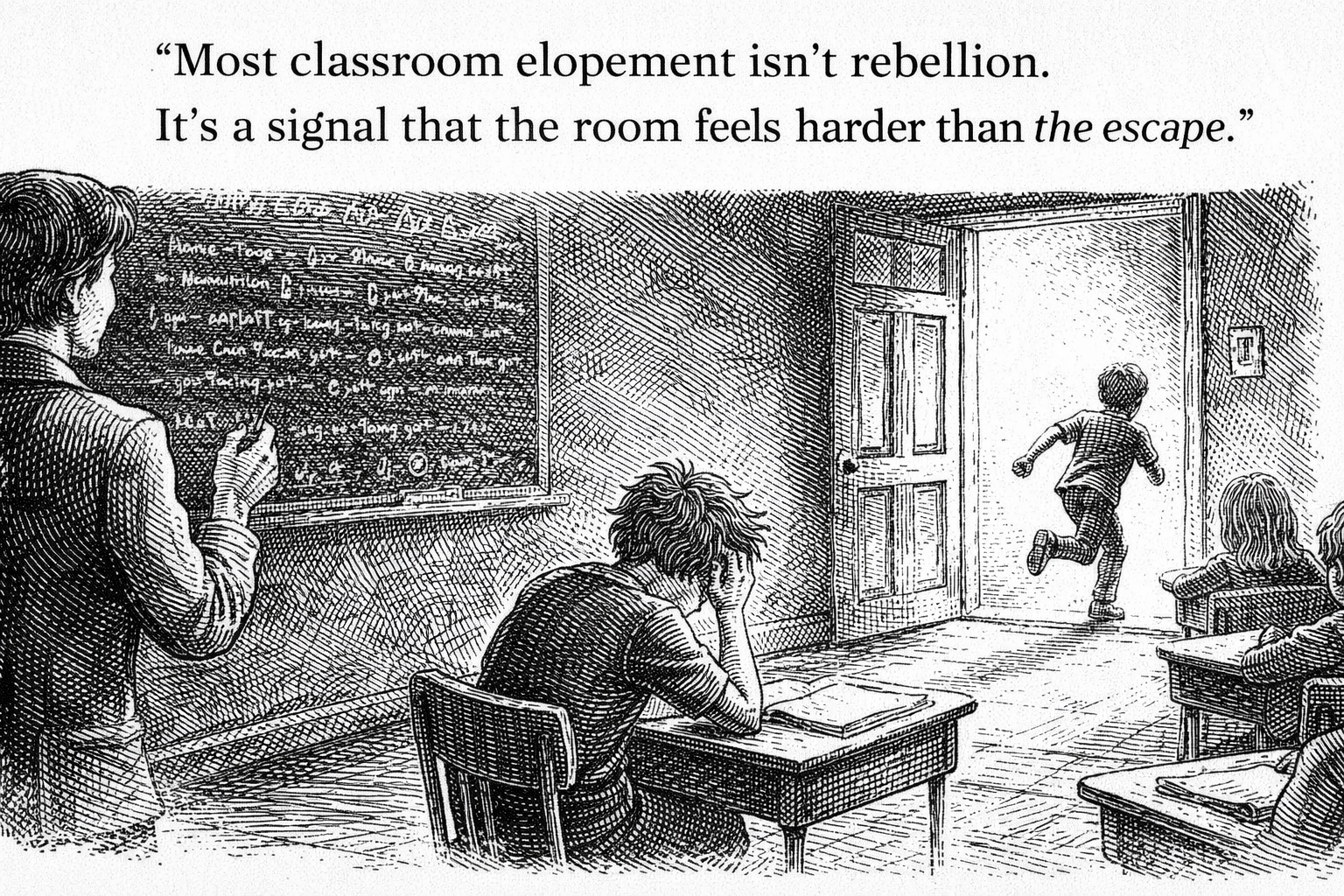
Most classroom elopement isn’t rebellion. It’s a signal that the room feels harder than the escape.
That does not mean the child is “bad.” It means the classroom isn’t yet safer or more rewarding than the hallway.
Why “just stay” doesn’t work
A kindergartener who can’t stay in a room for five minutes isn’t choosing chaos. Their nervous system is choosing relief.
When stress is high, language drops. Explanations become noise.
If you’re a parent watching this, the most important shift is to stop fighting the running and start replacing it.
Replace the escape with something that is:
- visible
- predictable
- rewarding
That’s where a first/then board and a visual schedule change the day.
The smallest step that builds staying power
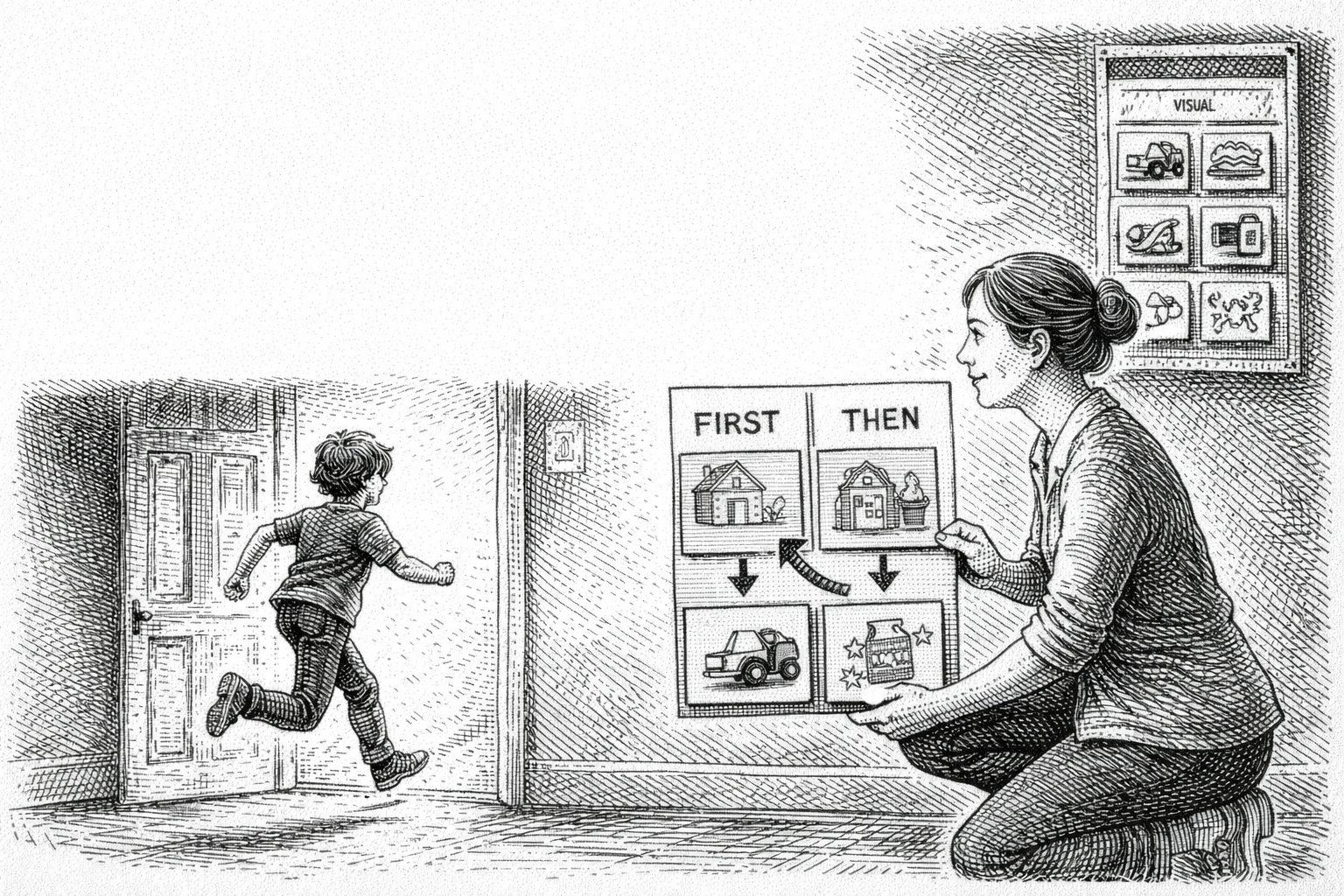
A first/then board is not a punishment tool. It is a promise.
It says:
- First: one tiny task
- Then: something they actually want
It turns a wide open day into one small step. That matters when a child’s tolerance for “stay here” is almost zero.
If you need an example of how to structure it, this guide on visual schedules for kids explains the basics in parent language.
Visual schedule = a room that makes sense
Running often happens when the next step feels unpredictable.
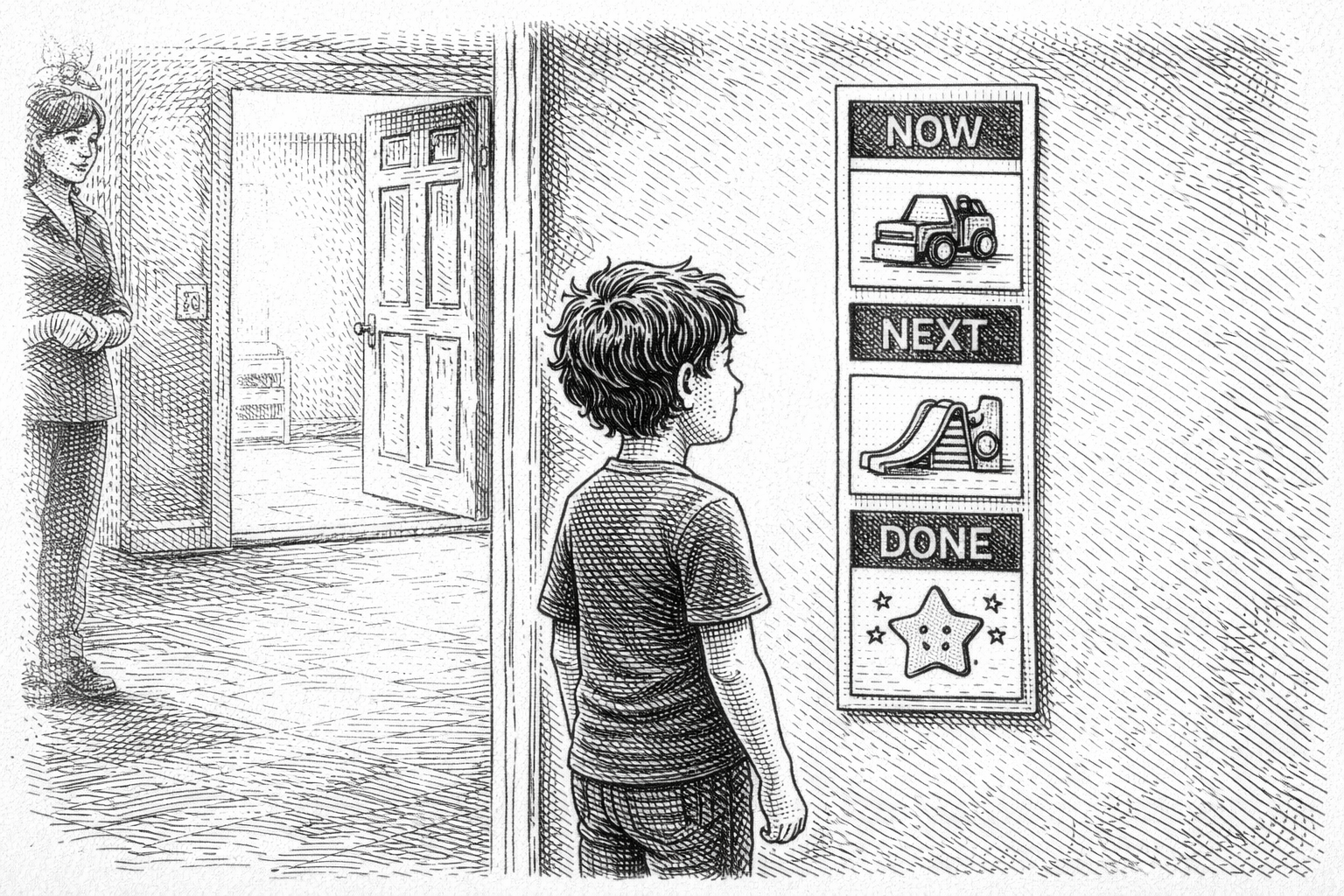
A visual schedule makes the sequence visible:
- now
- next
- done
That removes the uncertainty that fuels escape.
If transitions are the breaking point, this approach to a visual schedule for transitions is the version I would start with.
Reinforcement has to beat the hallway
If the hallway feels better than the classroom, it will win.
So the question becomes: what makes the classroom feel better right now, not someday?
Sometimes that means:
- letting them enter for 2 minutes and then leaving
- building in a preferred activity inside the room
- giving immediate reinforcement for staying, not just for working
This isn’t lowering the bar forever. It’s building a new floor first.
The parent version of the plan
As a parent, I’ve learned that “talking more” is rarely the answer.
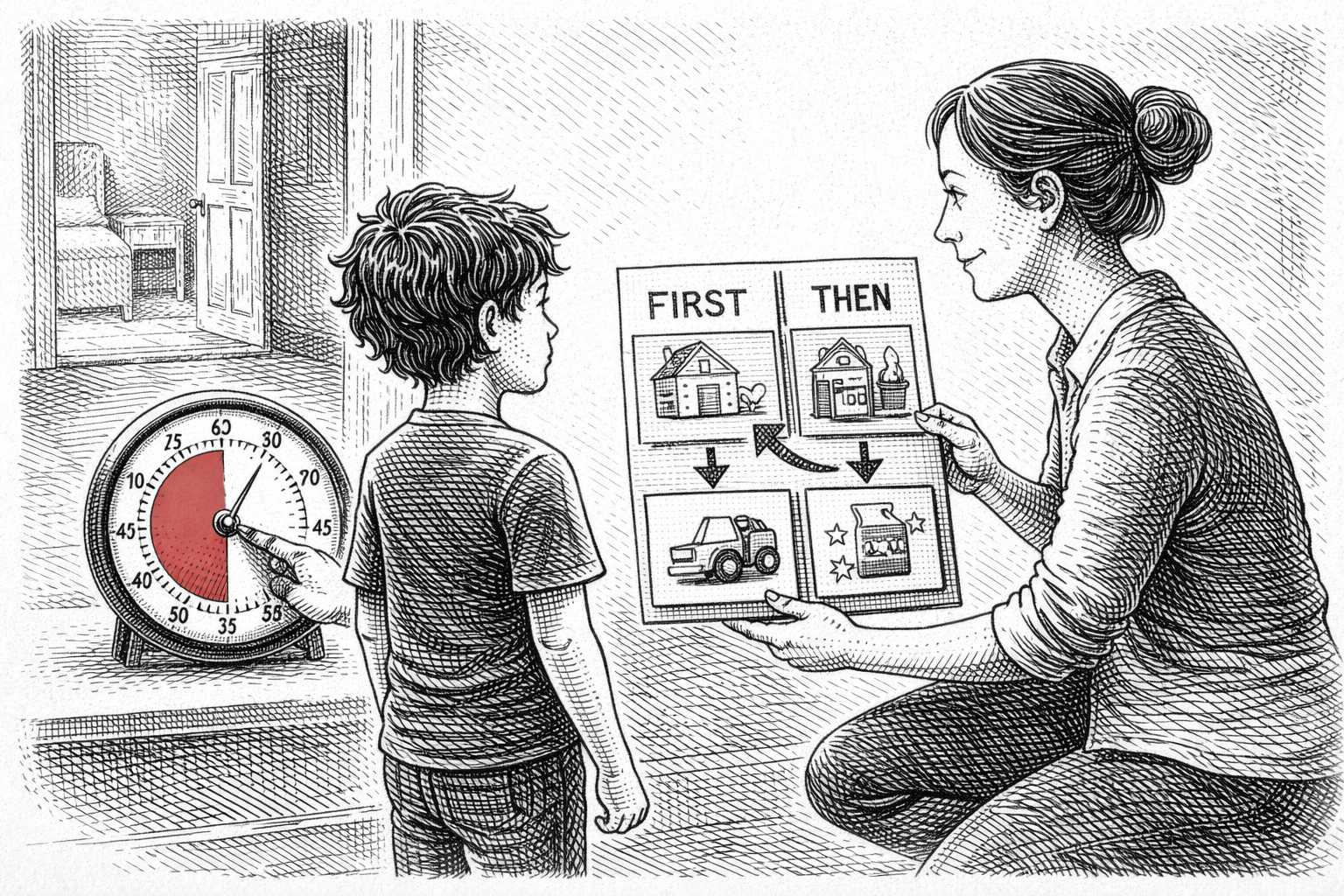
Structure is.
When time is visible and the next step is clear, the nervous system settles enough to try again. That’s why tools like a visual timer and a first/then board can change a day without turning it into a battle.
You won’t fix this with one lecture. You’ll fix it with one repeatable step.
Have you ever seen a child calm down the moment they could see “what happens next”?
Related Topic Hubs
If this post helped, these curated hub pages can guide your next steps.