 KidCue
2026-01-29
Preschool Feedback Feels Rough: How to Help a 3-Year-Old Who Seems 'Off Routine'
After a difficult preschool conference, use specific questions, home observations, and a short visual routine to turn vague concerns into practical support.
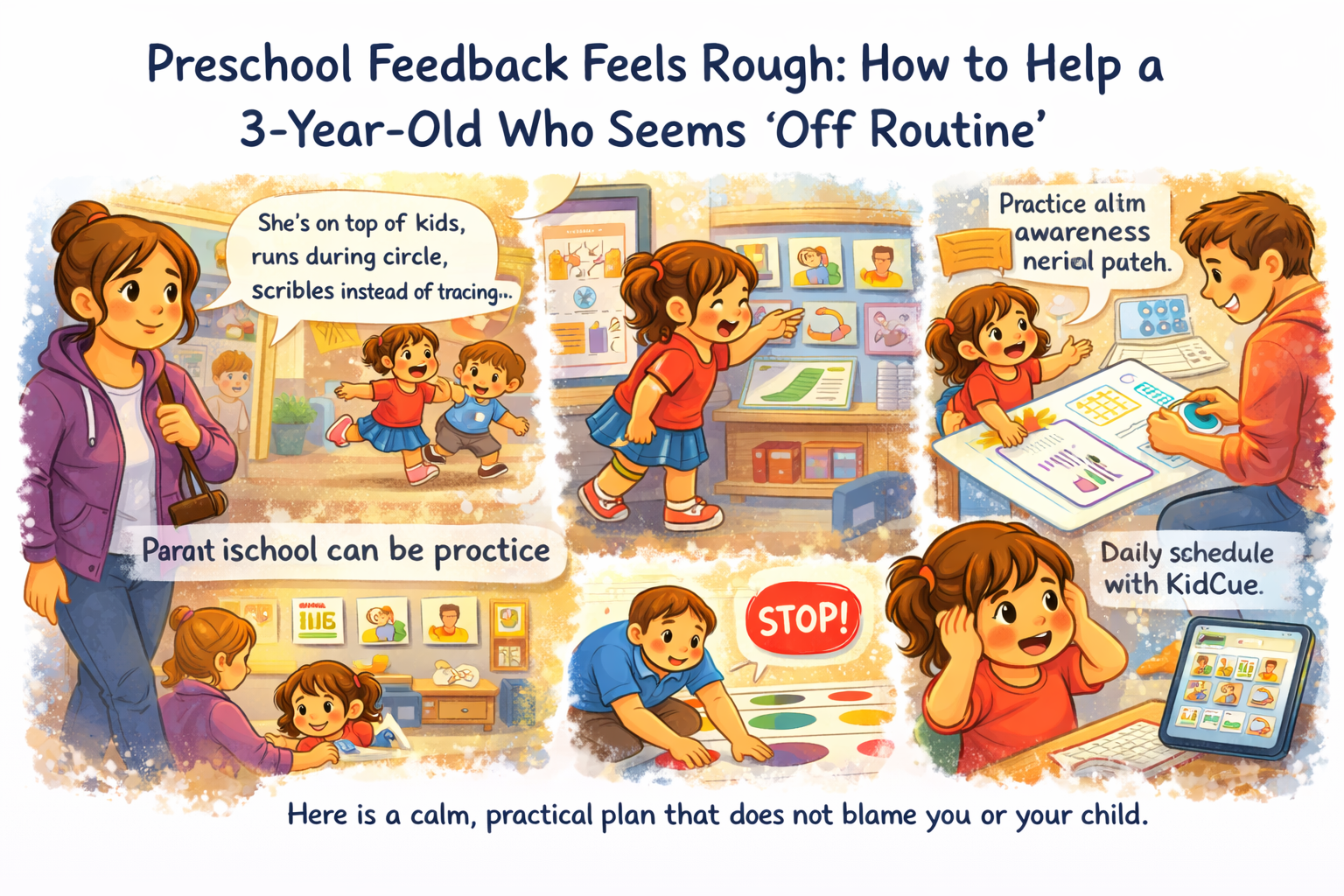
You walk out of the conference feeling like you missed a memo. Teacher says your 3.5-year-old is on top of kids, runs during circle, scribbles instead of tracing, and still needs a 1:1 to do the morning routine. You have a variable work schedule; mornings are chaos; guilt creeps in.
Here is a calm, practical plan that does not blame you or your child.
Make the routine visible, not verbal
- Home-to-school bridge: Print 4 cards: coat off, backpack hook, wash hands, choose table. Stick them on his cubby or send a small ring. He points and moves; staff redirects by pointing instead of repeating.
- One short visual for home mornings: Wake -> potty -> breakfast -> shoes -> car. Use the same order every day, even if the clock times change.
- Ready-made cards? Drop these into KidCue’s visual schedule app and let him tap each step before you head out.
Ask school for structured supports (not just “try harder”)
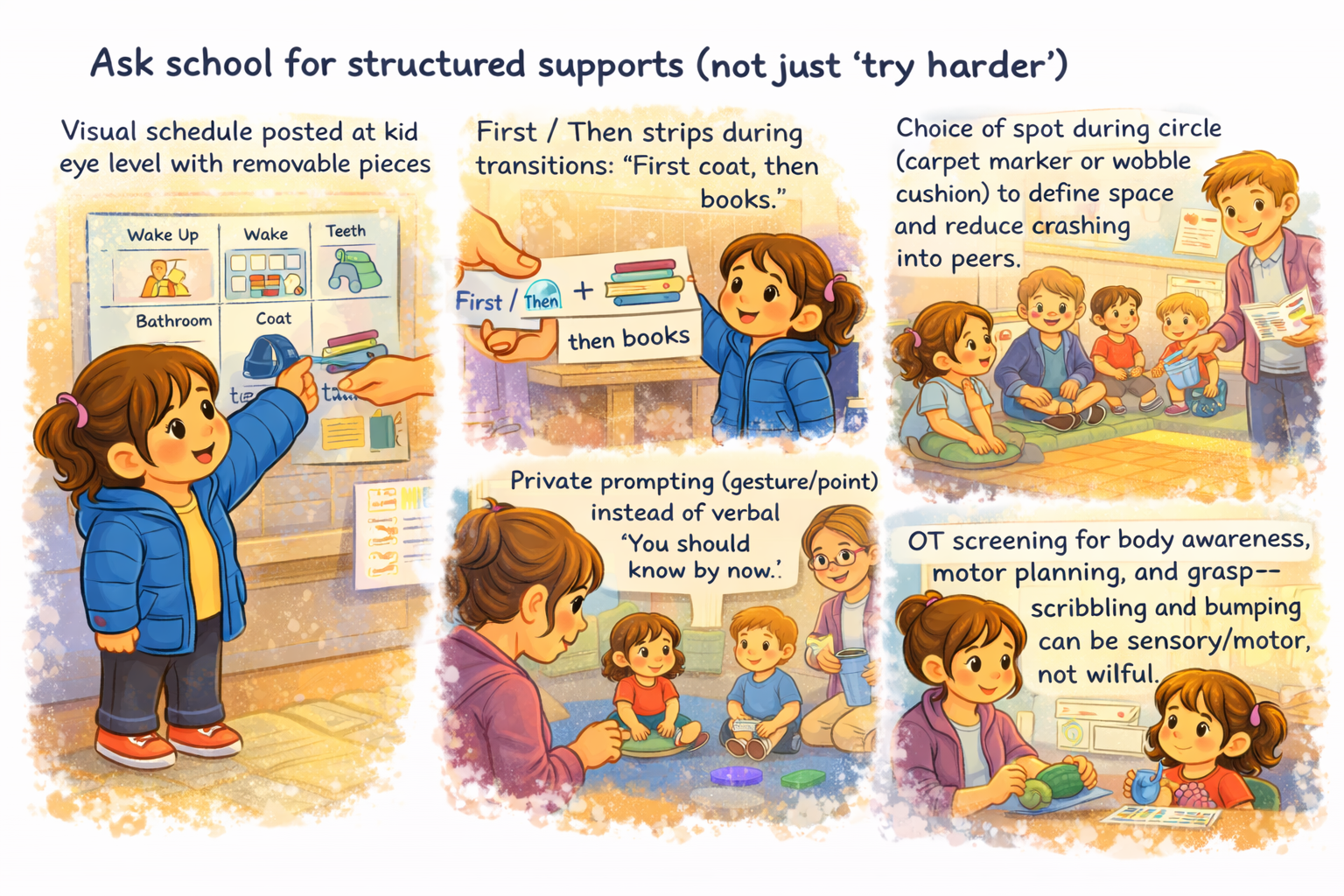
- Visual schedule posted at kid eye level with removable pieces.
- First/Then strips during transitions: “First coat, then books.”
- Choice of spot during circle (carpet marker or wobble cushion) to define space and reduce crashing into peers.
- Private prompting (gesture/point) instead of verbal “You should know by now.”
- OT screening for body awareness, motor planning, and grasp—scribbling and bumping can be sensory/motor, not willful.
Sensory and movement outlets
- 5-minute heavy work on arrival: wall pushes, carrying the book basket, chair pulls. Gives his body the input he is seeking so he is less in others’ space.
- If he hums or sings to regulate, offer a quiet fidget or whisper/sing prompt before circle starts.
Parallel play is still typical
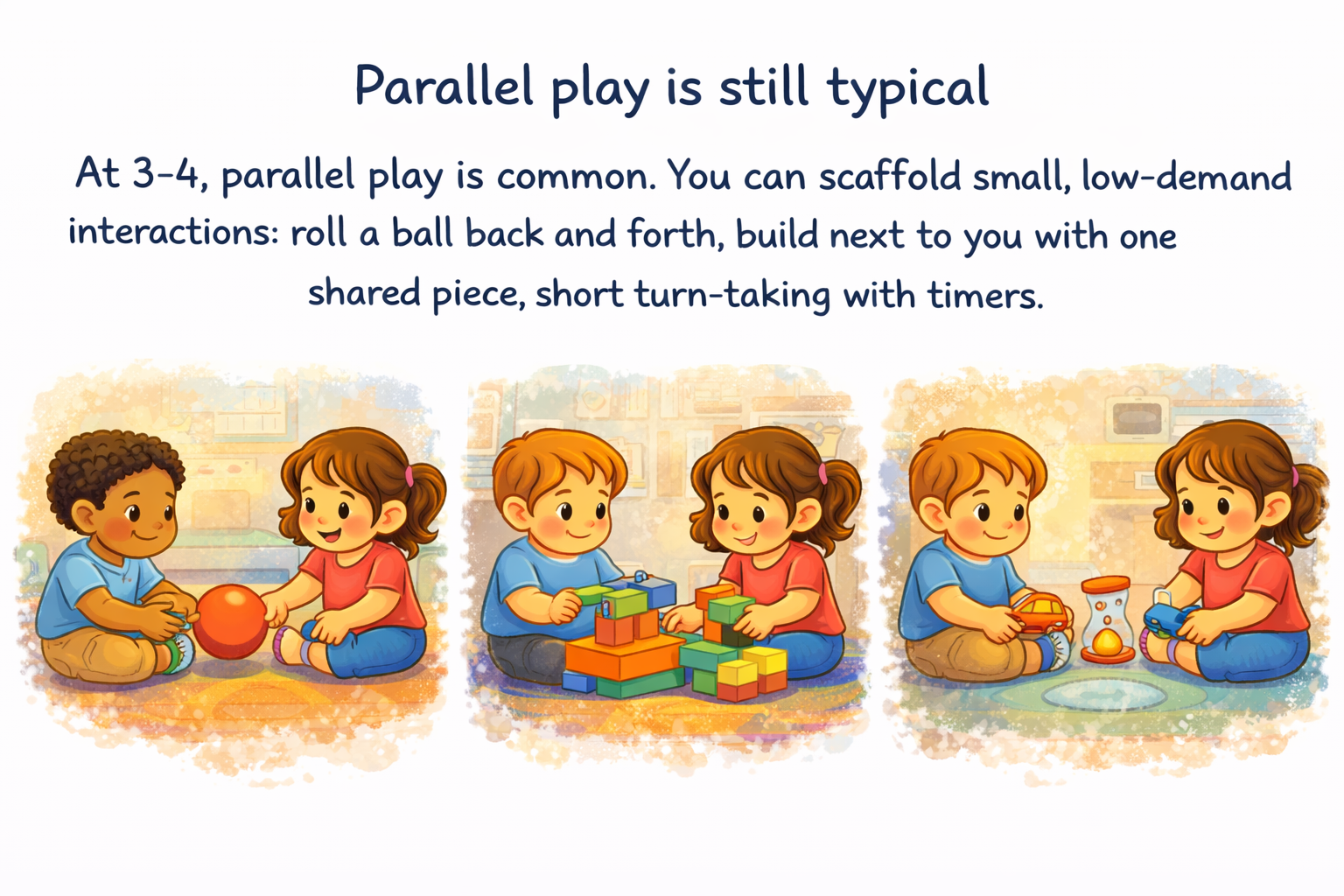
At 3–4, parallel play is common. You can scaffold small, low-demand interactions: roll a ball back and forth, build next to you with one shared piece, short turn-taking with timers.
Language supports that reduce overwhelm
- Pair speech with gesture. Point to the hook, then say “Hook.”
- Use “show me” instead of “why didn’t you.”
- Keep corrections specific and single-step: “Hands on knees,” not “Pay attention.”
What to put on the follow-up list
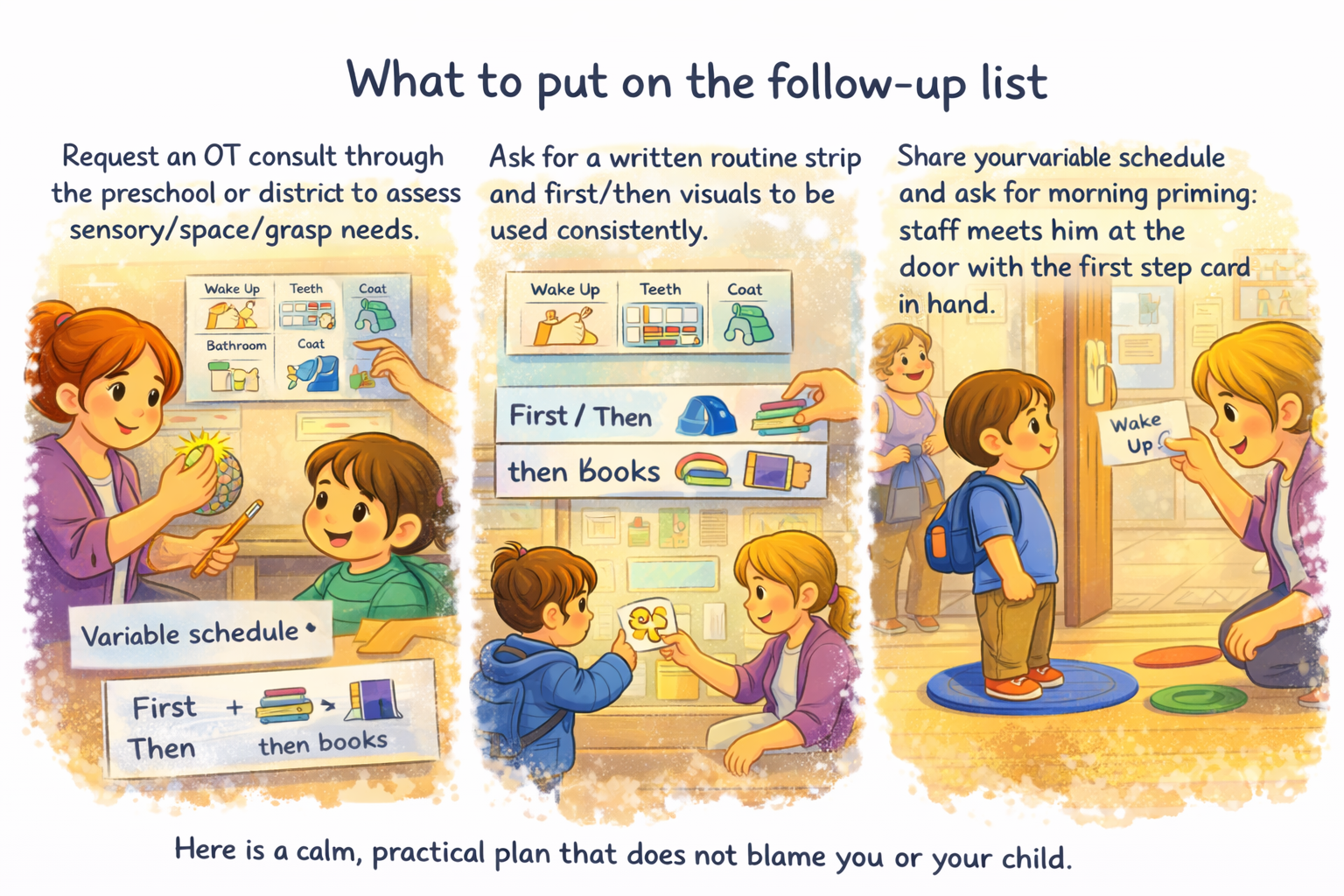
- Request an OT consult through the preschool or district to assess sensory/space/grasp needs.
- Ask for a written routine strip and first/then visuals to be used consistently.
- Share your variable schedule and ask for morning priming: staff meets him at the door with the first step card in hand.
- If he qualifies, add these to his plan so it is not dependent on which teacher is free.
Home practice that feels doable with shift work
- Keep the same order, even if the time shifts. Order matters more than the clock.
- Use a two-minute “practice school drop” on off days: act out coat-hook-wash-hands-choose-table with stuffed animals.
- Celebrate completion, not perfection: “You did your four steps,” even if wiggly.
The realistic expectation
Consistency of order + visuals typically shortens “I don’t know what to do” within 2–3 weeks. Spatial bumping and scribbling improve faster when paired with OT input and heavy work. Parallel play will gradually shift with simple shared tasks; it is not a failure.
If you want the visuals without crafting them from scratch, open the KidCue download page — the preschool-ready cards are drag-and-drop, and your child can tap through the morning steps while you handle your ever-changing shift.
Related Topic Hubs
If this post helped, these curated hub pages can guide your next steps.