 KidCue
2026-01-21
Do Visual Timers Actually Work?
Why visual timers work when explanations fail — and how making time visible reduces friction, anxiety, and resistance, especially for ADHD brains.
Let’s cut to the chase:
If “just five more minutes” keeps failing, it’s not stubbornness — it’s the brain struggling with time itself.
That’s why visual timers aren’t a cute productivity trick.
They’re a cognitive workaround.
This question comes up constantly in parenting communities. In one Reddit thread on r/UKParenting, a parent summed it up perfectly:
“My kid never seems to understand how long five minutes actually is… I tried a visual timer, but does it really work?”
Short answer: yes — in very predictable ways.
Here’s why.
1. The ADHD Brain Doesn’t Experience Time Like a Clock
ADHD isn’t just about attention.
It’s primarily an executive function delay, especially around time perception.
Traditional timers assume you can:
- Hear a number
- Interpret what it means
- Translate that into action
That’s three mental steps.
For ADHD brains, that chain regularly breaks.
A visual timer collapses the process:
- Time isn’t abstract — it’s visible
- You don’t imagine duration — you see it shrinking
- You don’t calculate — you intuit
This dramatically lowers cognitive load.
2. Visual Timers Directly Address Time Blindness
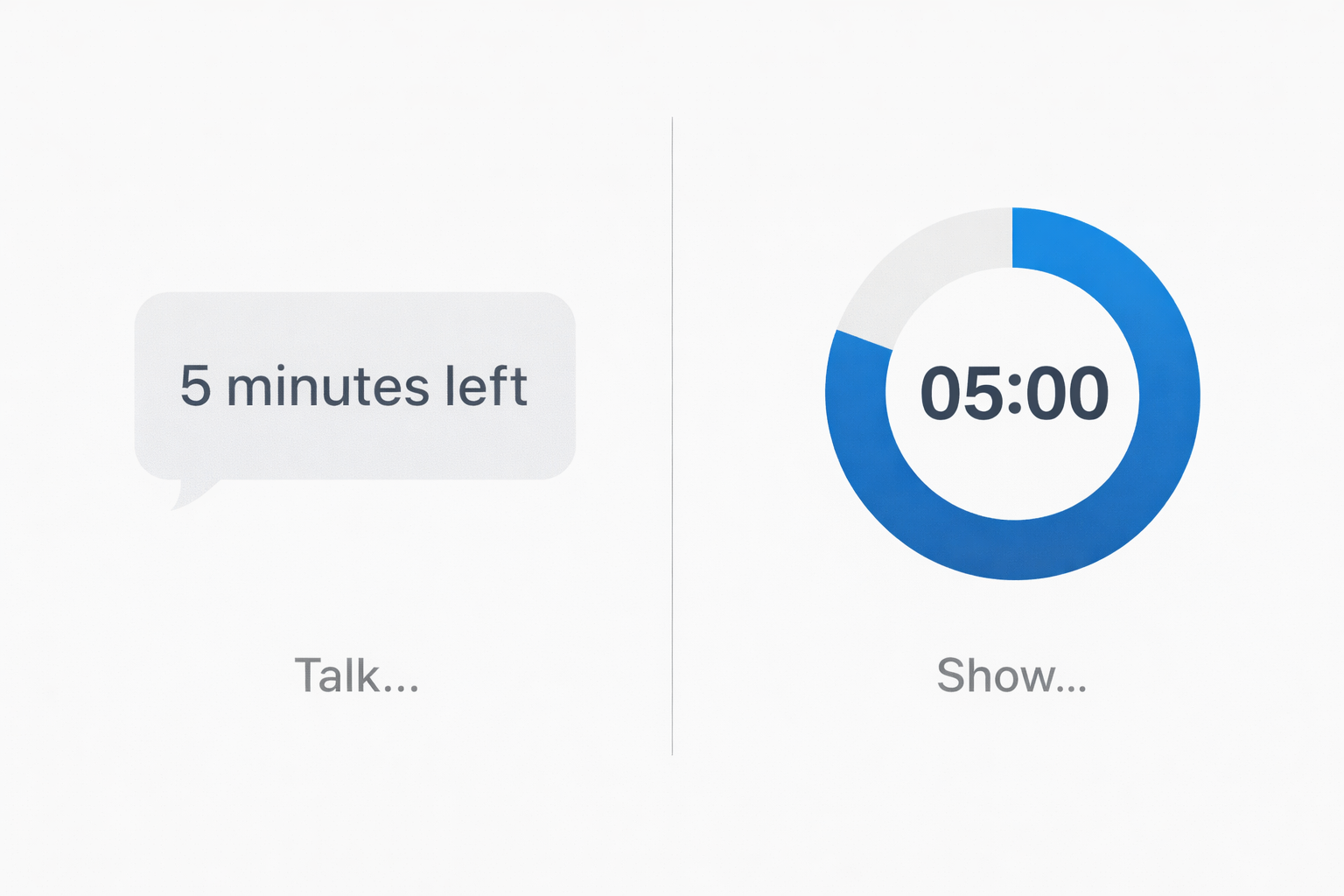
One of the most common ADHD traits is time blindness — difficulty sensing how much time has passed or remains.
Verbal cues like:
- “Soon”
- “Almost”
- “Five minutes”
…mean very little without a reference frame.
A visual timer is that frame.
Instead of guessing, the brain tracks progress visually.
Uncertainty drops. Anxiety drops. Resistance drops.
3. They Externalize Executive Function
A core principle from Parenting Children with ADHD is this:
Don’t expect internal control when external structure is missing.
Visual timers work because they outsource executive function to the environment.
They help with:
- Task initiation
- Sustaining attention
- Transitions
- Stopping without meltdown
You’re not fixing the brain.
You’re supporting it.
4. Why They’re Especially Powerful for Transitions
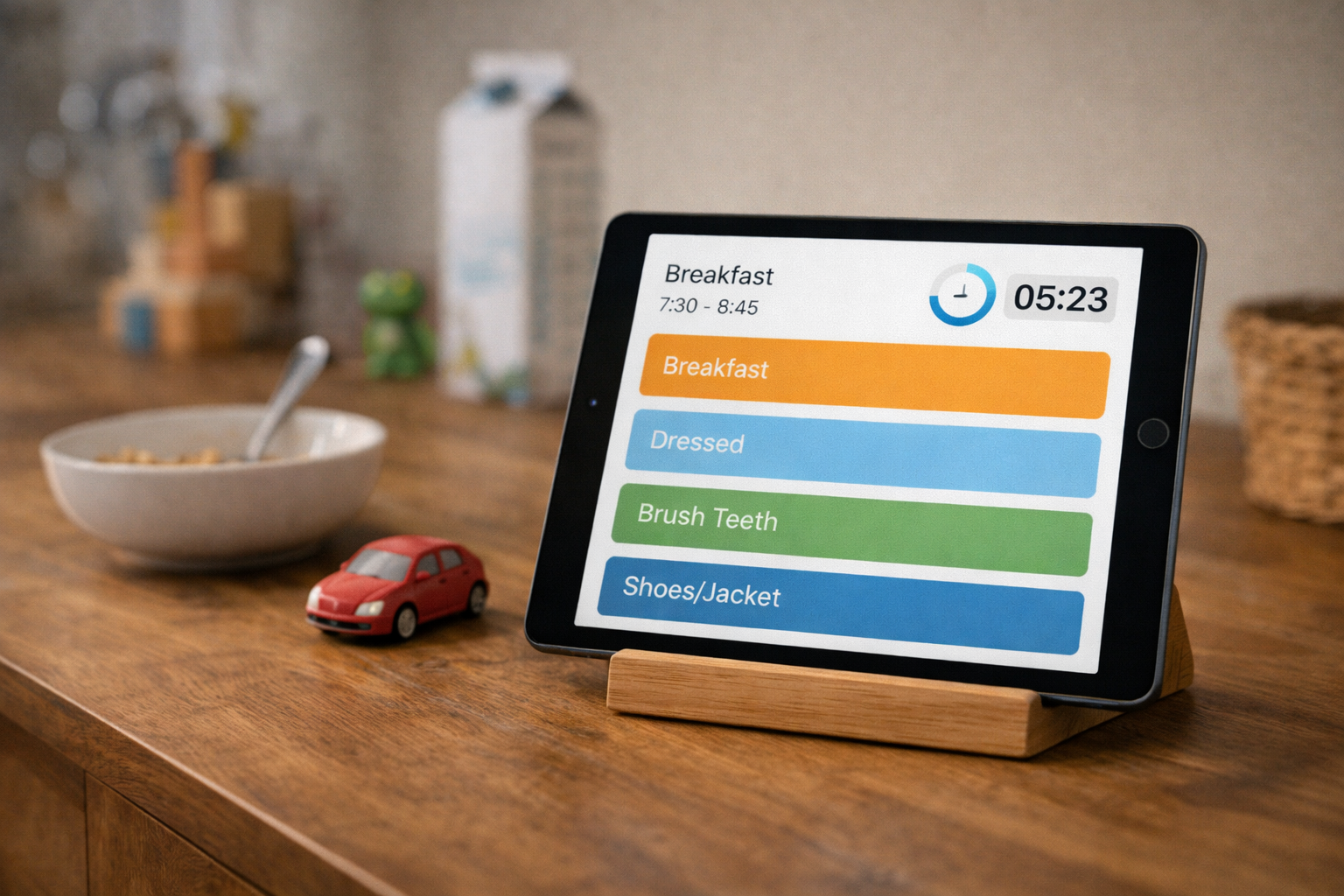
Most meltdowns don’t happen during activities.
They happen when activities end.
Transitions like:
- Turning off the TV
- Leaving the house
- Switching tasks
A visual timer turns “sudden loss” into “visible progression.”
Instead of:
“Why did this just end?”
The brain experiences:
“I saw this coming.”
That difference matters.
5. Visual Timers Don’t Fix ADHD — They Compensate for It
This matters:
Visual timers are not a cure.
They don’t make kids more disciplined. They don’t eliminate ADHD.
They compensate for a known neurological gap by changing how time is represented.
That’s why they work.
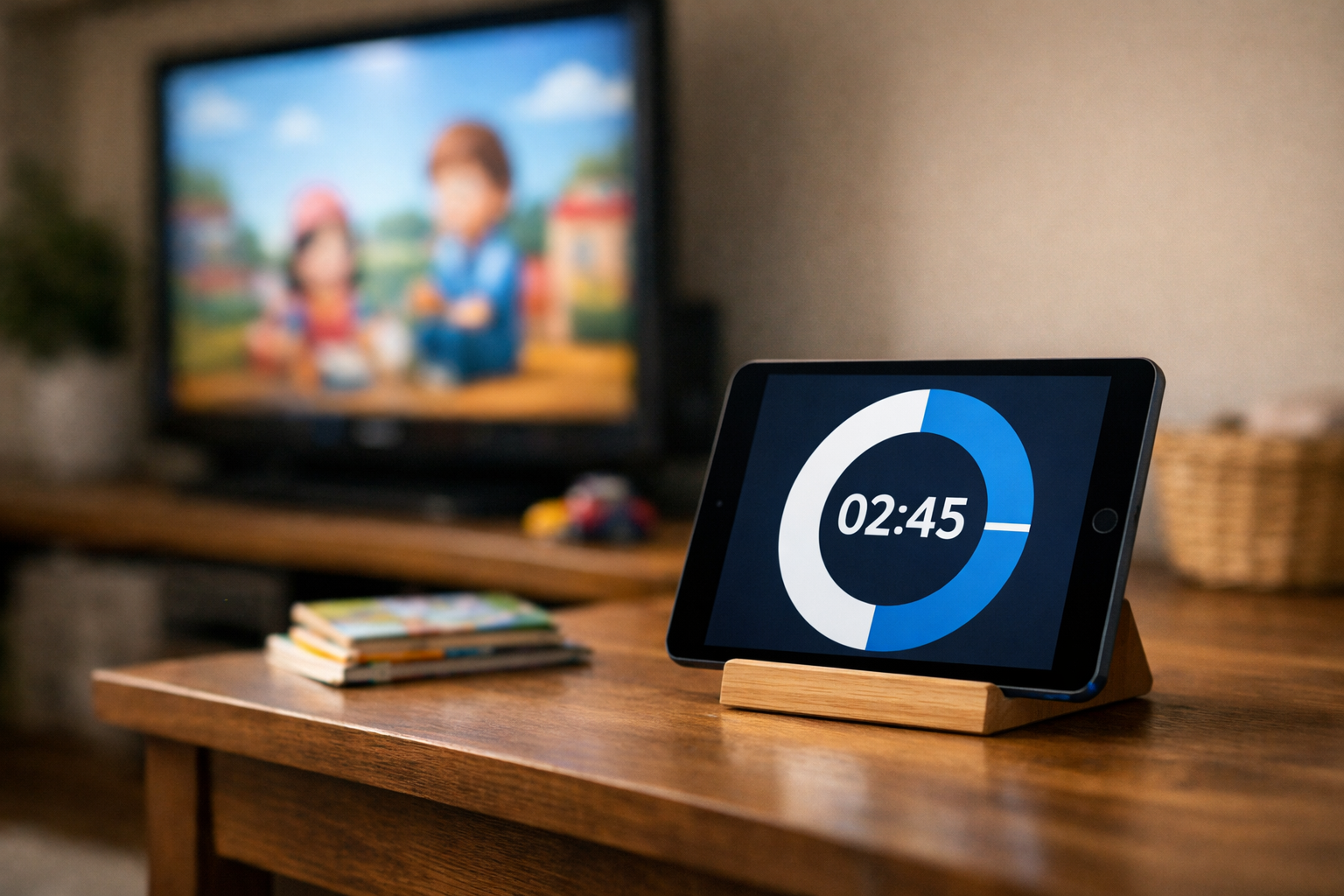
6. A Concrete Example (Why Placement Matters)
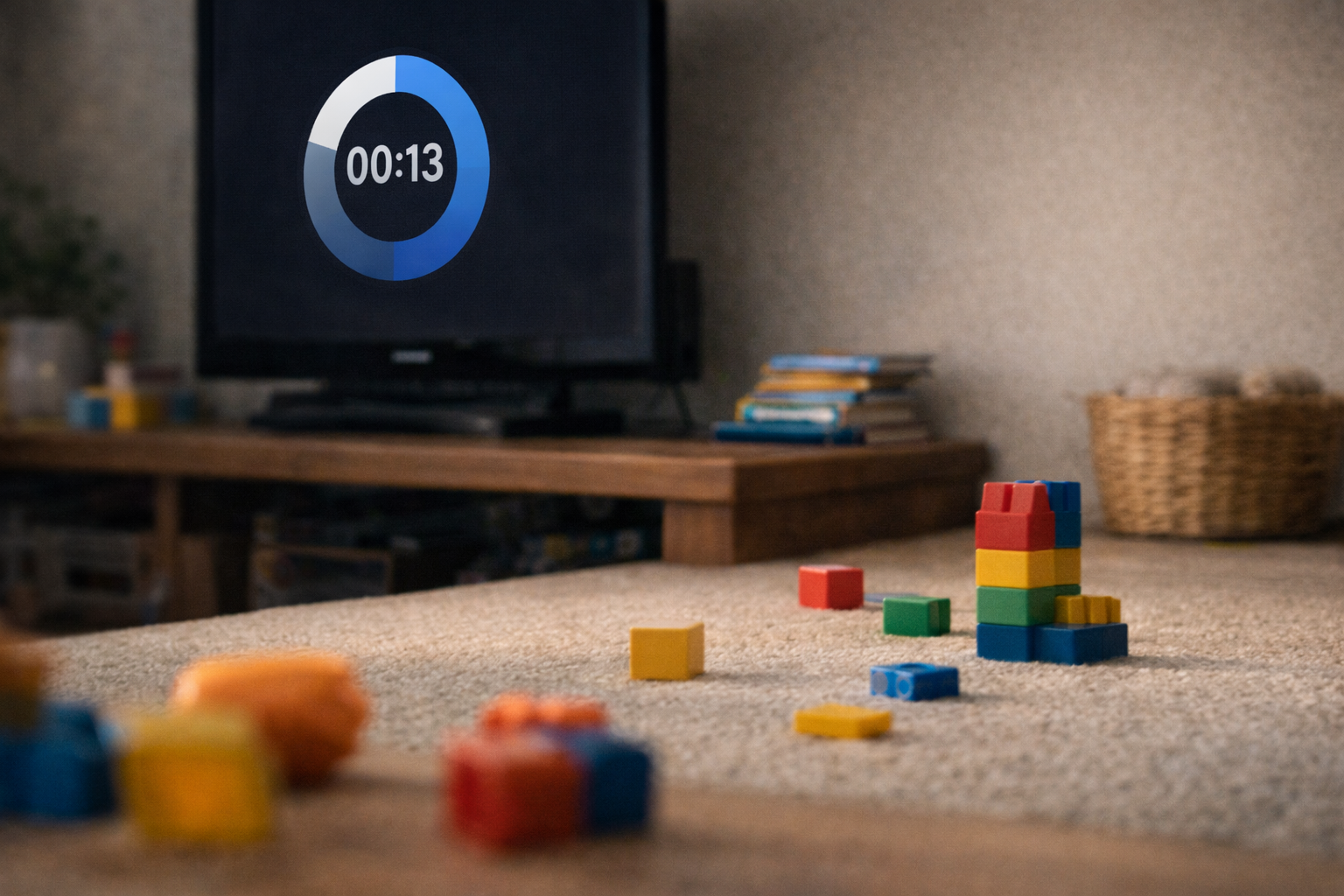
One detail often missed: where and how you use a visual timer matters.
For example:
- During TV time
- On an iPad placed on a stand
- Sitting on the TV console, under the screen
No alerts.
No sounds.
No interaction.
Time just exists in the background.
When the animation finishes, the transition happens — without arguing, warnings, or escalation.
This is what “calm technology” looks like in real life.
So… Do Visual Timers Actually Work?
Yes — when used correctly.
They work because they:
- Make time concrete
- Reduce cognitive load
- Externalize executive function
- Lower anxiety around transitions
They don’t force discipline.
They create clarity.
The Real Question
The better question isn’t:
Do visual timers work?
It’s:
How can I make time visible in a way my brain can actually use?
Because invisible time creates confusion.
And confusion always looks like resistance.
Related Topic Hubs
If this post helped, these curated hub pages can guide your next steps.